





Beyond Cartoons and Clichés
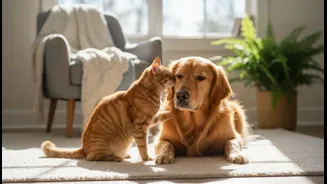
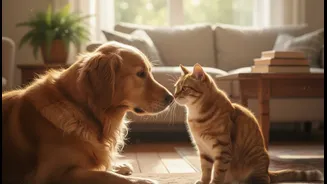
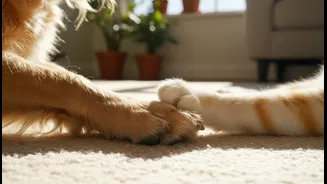
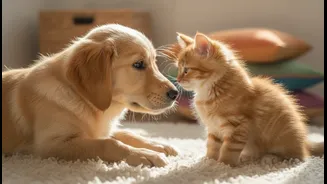
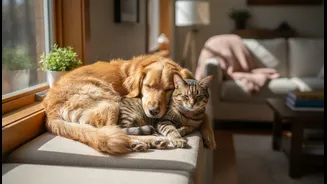
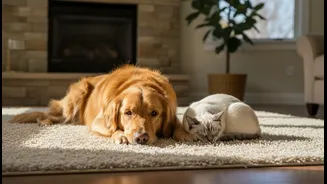
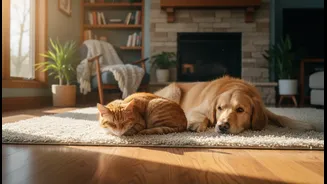
The idea of dogs and cats as natural enemies is a myth largely fueled by cartoons. While their instincts can lead to friction, the reality in millions of homes is far more nuanced. Many dogs and cats coexist peacefully, often forming deep bonds. The classic
stereotypes—the unconditionally loyal dog versus the coolly independent cat—are vast oversimplifications. Recent science confirms that both species have complex, individual personalities, much like humans. These traits are shaped more by environment and individual temperament than by broad species-wide labels. The debate over which is 'better' often ignores this individuality, focusing instead on worn-out clichés that do a disservice to both animals and the unique joy they bring into our lives.
Speaking Different Languages
Much of the perceived conflict between dogs and cats stems from a simple communication breakdown. They evolved with entirely different social structures and, as a result, speak different languages. A dog's wagging tail is often a sign of excitement or happiness, an invitation to engage. A cat wagging its tail, however, is often signaling irritation or overstimulation, a request for space. When a cat exposes its belly, it's a profound show of trust, not necessarily an invitation for a belly rub, which can trigger a defensive reaction. A dog, misinterpreting this, might see it as a sign of submission or play. These crossed signals can lead to misunderstandings, but when they learn each other's cues, often by growing up together, they can develop a shared language. This process of learning and adaptation is a powerful testament to their intelligence and flexibility.
A Tale of Two Histories
Their evolutionary paths explain their different approaches to life and love. Dogs evolved from pack animals, hardwired for social cooperation and reading group dynamics. This history makes them highly attuned to human cues and eager to please, forming strong hierarchical bonds. Cats, on the other hand, descended from solitary hunters. Their social skills are more subtle, and their independence is a feature, not a bug. They form bonds on their own terms and are masters of self-sufficiency. Neither approach is inherently superior; they simply represent different strategies for survival and companionship. A dog’s sociability might encourage a more active, community-oriented lifestyle for its owner, while a cat’s quieter presence offers a different, more calming form of connection.
The Modern Multi-Pet Household
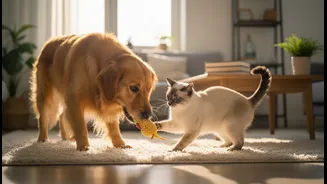
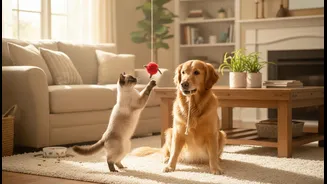
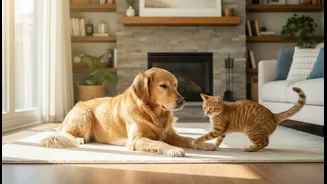
In the neutral ground of a loving home, these ancient differences can blur. While not all dogs and cats will be best friends, many can learn to coexist and even thrive together. Success often depends on careful introductions and management by the owner. Providing a cat with vertical spaces and safe zones where they can retreat is crucial. This respects their need for control and security. Dogs, in turn, need to be taught calm behavior around their feline housemates. When these needs are met, the home becomes a living laboratory of interspecies diplomacy. A dog can learn patience from a cat, and a cat can learn to be more playful and trusting. Their interactions show that harmony is possible, even between beings with fundamentally different worldviews.
What Each Pet Gives Us
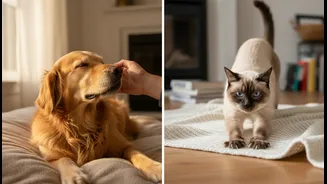
Ultimately, the question isn't which pet is better, but what kind of companionship best suits our own lives and personalities. Studies show that both dog and cat owners report overwhelmingly positive impacts on their mental health. Petting an animal has been scientifically shown to reduce the stress hormone cortisol and increase the bonding hormone oxytocin. Dogs may encourage more physical activity and social engagement. Cats, in turn, are often cited for providing a calming presence and reducing anxiety. People who identify as 'dog people' tend to score higher on traits like extroversion and agreeableness, while 'cat people' often score higher on openness and curiosity. This suggests we may choose pets that either mirror our own personalities or fill a need within our lives. It's a relationship, a dynamic exchange, not a contest.