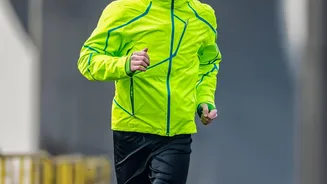







Gear Up for the Elements
Exercising in the monsoon isn't about staying perfectly dry, but about staying comfortable and safe. The key is to choose appropriate apparel. Opt for lightweight, moisture-wicking synthetic fabrics that pull sweat away from your skin. Unlike cotton,
which absorbs water and becomes heavy, these technical materials help reduce chafing and prevent you from feeling weighed down. A breathable, water-resistant jacket is a great outer layer, as fully waterproof options can trap heat and sweat, making you wet from the inside. Don't forget your feet; choose running shoes with good grip to prevent slips on slick surfaces and consider a hat with a brim to keep rain out of your eyes.
Adjust Your Pace and Stay Alert
High humidity dramatically affects how your body cools itself. Normally, sweat evaporates to cool you down, but when the air is already saturated with moisture, this process is much less efficient. This can cause your core body temperature to rise faster, putting extra strain on your cardiovascular system. Therefore, it's wise to reduce the intensity and duration of your usual workout, especially when you're first acclimatizing. Pay close attention to your surroundings; visibility is often poor during a downpour, and roads can be treacherous. Avoid exercising during heavy rain or thunderstorms and steer clear of waterlogged areas which can hide hazards and increase the risk of infections.
The Post-Workout Priority: Get Dry Immediately
What you do after your workout is just as important as the exercise itself. Lingering in damp, sweaty clothes creates a warm, moist environment that is a perfect breeding ground for bacteria and fungi. This can lead to a host of unpleasant skin issues, from acne breakouts to fungal infections like athlete's foot and ringworm. Changing out of your wet gear as soon as possible is one of the most critical steps to prevent these problems. Even if you don't have time for a full shower right away, getting into a set of dry clothes should be your top priority.
Cooling Down in High Humidity
A proper cool-down is essential after any workout, but it takes on special importance in humid conditions. Because your body's natural cooling system is less effective, you need to be more deliberate about bringing your heart rate and body temperature back to normal. Instead of stopping abruptly, spend 5-10 minutes tapering off your pace with a slow walk or gentle stretching. This helps prevent dizziness and aids in muscle recovery. A shower after your workout will not only wash away sweat and bacteria but also help cool you down. If you feel overheated, a cool shower can be particularly beneficial.
Hydration and Hygiene Beyond the Run
It might feel cooler when it's raining, but don't let that fool you; you are still sweating and losing fluids, often more than you realize due to the high humidity. It's crucial to stay hydrated by drinking water before, during, and after your workout. Dehydration can happen quickly and increases the risk of heat-related illnesses like heat exhaustion. Finally, maintain good hygiene with your gear. Don't reuse workout clothes without washing them, as bacteria can multiply in the fabric between wears. Ensure your shoes have a chance to dry out completely before you use them again to prevent mould and fungal growth.