









The World-Class Stage
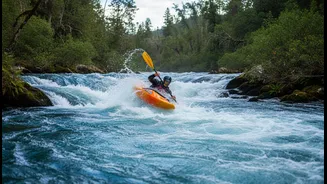
There's no denying the Malabar River Festival's importance. Since its inception, it has grown into Asia's largest whitewater kayaking competition, attracting elite athletes from across the globe and a growing number of Indian paddlers. With events like
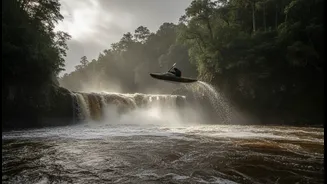
the Extreme Race, Boater Cross, and Slalom, the festival transforms the Chalipuzha and Iruvanjipuzha rivers into a world-class arena. Winners are crowned 'Rapid Raja' and 'Rapid Rani', earning significant prize money and prestige. For the Indian kayaking community, it’s a vital platform—a place to learn from international pros, gain exposure, and celebrate the sport. The festival has undeniably put Kerala on the global adventure tourism map and inspired a new generation to look at its rivers with adventurous eyes.
The Anatomy of Competence
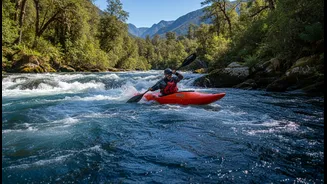
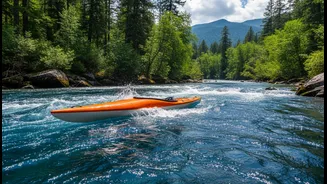
But what does it really mean to be competent on whitewater? It’s far more than simply staying upright and paddling hard. True competence is a quiet language spoken between a paddler and the river. It’s about 'reading' the water—understanding how currents form, where hazards like strainers might be hidden, and how to use features like eddies to your advantage. It involves mastering technical skills like the Eskimo roll, brace strokes, and ferry gliding to navigate turbulent water with control, not just luck. This expertise isn't developed by entering a single race. It is built over hundreds of hours of practice on different rivers, progressing through classes of rapids under expert guidance, and meticulously learning safety and rescue techniques.
The 'Shortcut' Fallacy
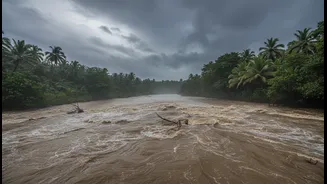
The festival's high visibility can create a tempting but dangerous illusion: that participation is the ultimate goal. For aspiring kayakers, the allure of competing at such a prestigious event can overshadow the need for foundational training. It’s easy to be seduced by the finish line without fully appreciating the long, often unglamorous, road to the start. The danger lies in a 'shortcut' mentality, where paddlers with more ambition than experience attempt to tackle rapids beyond their ability. While the festival does have an amateur category to encourage newcomers, the leap to the pro levels, which require navigating challenging Class 4 rapids, is immense. An accident on the river isn't like a mistake in other sports; the consequences can be severe.
A Goal, Not a Starting Block
The Malabar River Festival should be framed as an inspiration—a goal to aspire to after years of dedicated training, not a starting block for beginners. The journey to becoming a proficient whitewater kayaker is a structured process. It starts with Level 1 courses on calm waters, learning basic strokes and safety drills. It progresses to intermediate levels, mastering rolls and navigating Class 2 or 3 rapids with confidence. Along the way, paddlers build the river sense, mental agility, and physical conditioning necessary to handle the unpredictable nature of whitewater. To see the festival as anything other than a celebration of this deep, earned expertise is to misunderstand the sport entirely.