



A New Celestial Visitor
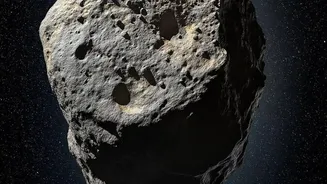
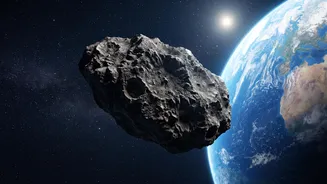
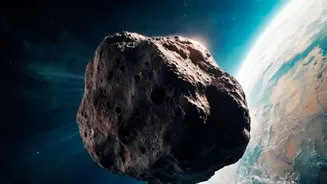
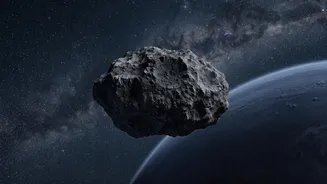
For the next few weeks, Earth has more than one moon. Astronomers have confirmed that a small near-Earth asteroid, officially designated 2026 QQ8, was captured by our planet's gravitational pull back in April. This celestial hitchhiker, estimated to be
only about two metres (or six feet) in diameter, is now in a temporary orbit around us. The discovery was first made in August by Hungarian astronomer Krisztián Sárneczky, a seasoned asteroid hunter. Initially, there was debate about whether it was a natural object or a piece of man-made space junk, a common challenge with such small discoveries. After careful observation using powerful telescopes, including the Lowell Discovery Telescope in Arizona, the object's natural origin as an asteroid was confirmed.
What Is a 'Quasi-Satellite'?
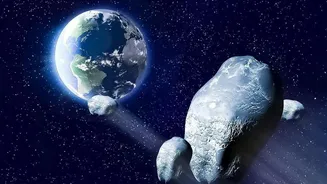
While some are calling 2026 QQ8 a 'mini-moon', its technical classification is closer to that of a quasi-satellite. Unlike a true moon, which is gravitationally bound to its planet, a quasi-satellite orbits the Sun but has an orbital period that is almost identical to the planet it accompanies. This 1:1 orbital resonance keeps it close to the planet for long periods. From our perspective on Earth, the asteroid appears to trace a complex, looping path around us, but it is not truly captured in the same way our Moon is. These relationships are temporary and unstable. Objects can transition from being a quasi-satellite to other co-orbital states, like a 'horseshoe orbit', before perhaps returning again centuries or millennia later.
An Intimate, but Distant Dance
The term 'companion' might suggest a close encounter, but 2026 QQ8 is keeping a safe distance. Its orbit is quite far out, even further than our own Moon. Due to its small size and distance, it's far too faint to be seen with the naked eye or even a standard backyard telescope. Astronomers explain that while this event is exciting, it is not entirely uncommon. It's believed that Earth may have at least one such temporary companion at any given time, but their tiny size and rapid movement make them incredibly difficult to detect with current survey technology. Previous temporary visitors that have been identified include asteroids 2006 RH120 and 2020 CD3.
A Harmless Goodbye
This celestial partnership is a short-lived affair. Asteroid 2026 QQ8 is expected to break free from Earth's gravitational influence in early December. Once it escapes, it will continue on its own independent orbit around the Sun. There is no threat of impact to our planet. Scientists have made it clear that even if the asteroid were on a collision course, its small size means it would simply burn up and disintegrate harmlessly upon entering our atmosphere. At most, it might create a bright meteor, or 'shooting star', for some lucky observers. The study of such objects is valuable, however, as it helps astronomers understand the population of near-Earth objects and the complex gravitational dynamics of our solar system.