




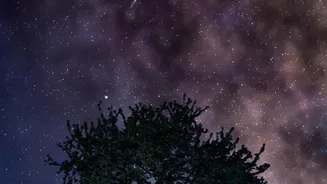


A Dazzling Celestial Pairing
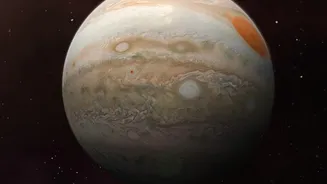
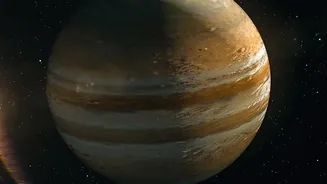
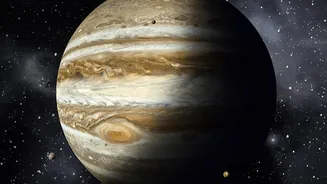
October is a fantastic month for stargazers, and one of its main events is the close approach of the Moon and Jupiter. On the morning of October 6, 2026, a thin waning crescent Moon will appear beautifully close to the gas giant in the pre-dawn sky. This
event, known as a conjunction, happens when two celestial bodies appear near one another from our perspective on Earth. Jupiter, which shines with a steady, bright light, will be unmistakable next to the delicate crescent of the Moon, creating a stunning visual that’s easily visible to the naked eye. For those in India, this alignment will be visible by looking toward the eastern sky before sunrise.
Your Viewing Guide for October 6
To catch this spectacular sight, you'll need to be an early riser. The event takes place in the hours before dawn on Tuesday, October 6. Find a location with a clear, unobstructed view of the eastern horizon, away from the glare of city lights if possible. The Moon will be a slim crescent, about 20% illuminated, so its light won't overpower the view. As the pair climbs higher in the sky towards the southeast, their proximity will make for a memorable photo opportunity for astrophotographers and a delightful sight for casual observers. You don't need any special equipment, but a pair of binoculars will certainly enhance the view.
Look Closer: Jupiter’s Moons
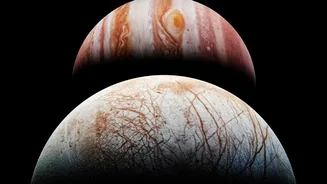
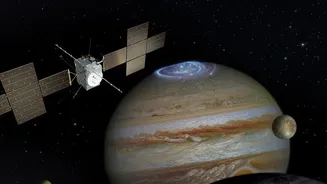
While you’re admiring Jupiter, a good pair of binoculars or a small telescope can reveal an even more exciting detail: its four largest moons. Known as the Galilean moons—Io, Europa, Ganymede, and Callisto—they appear as tiny, star-like points of light flanking the planet. Seeing them for yourself is a thrilling experience, as it was their discovery by Galileo Galilei that revolutionised our understanding of the solar system. Depending on their orbits, you may see two, three, or all four on any given night. This close approach of our Moon makes it a great opportunity to try and spot them, adding another layer of wonder to your stargazing session.
More Stars of the October Sky
The Moon and Jupiter aren't the only celestial attractions this month. On the morning of October 5, the day before its encounter with Jupiter, the Moon will pass close to the planet Mars. Furthermore, Saturn reaches opposition on October 4, meaning it will be at its biggest and brightest for the year, rising around sunset and remaining visible all night. The Draconid meteor shower also peaks in the early evening of October 8-9, and with a near-new moon, the skies will be dark enough to spot its shooting stars. Later in the month, the Orionid meteor shower will peak on October 21-22, offering another chance to see meteors streak across the sky, ideally in the pre-dawn hours.
Tips for the Best Stargazing Experience
To make the most of these celestial events, a little preparation goes a long way. Find a spot away from city light pollution for the darkest possible skies. Give your eyes about 15-20 minutes to fully adapt to the darkness; this will help you see fainter stars and details. While most of these events are visible with the naked eye, a simple pair of binoculars can dramatically improve your view of Jupiter’s moons or star clusters. Finally, consider using a stargazing app on your phone to help identify constellations and planets, turning your night of viewing into an educational experience.