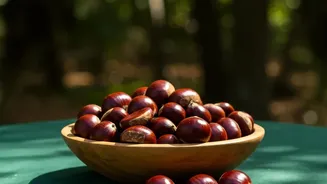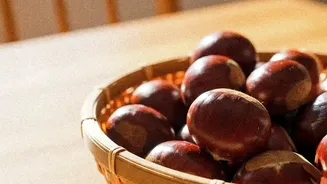





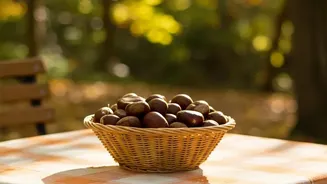
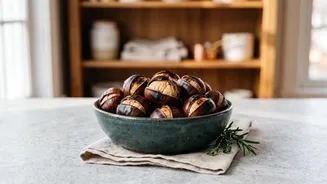
The aroma of roasting chestnuts is a hallmark of the festive season, evoking cosy images of holiday markets. But before you toss them in the oven, there’s one crucial step many overlook: scoring the shells. Here’s why that simple cut is so vital.
To Prevent Messy Explosions
The most
critical reason to score a chestnut is safety. As a chestnut heats up in the oven, the water content inside turns into steam. This steam builds up significant pressure within the hard, sealed shell. If that pressure has no escape route, the chestnut can, and often will, explode. This not only creates a difficult mess to clean inside your oven but can also be a safety hazard, sending hot fragments flying when you open the door. A simple slit or 'X' on the shell provides a necessary vent for the steam to release gently, preventing a 'mini firebomb' situation and ensuring your roasting experience remains a pleasant one.
The Secret to Easy Peeling
Anyone who has struggled with a stubbornly encased chestnut knows the frustration. Scoring the shell before roasting is the key to an infinitely easier peeling process. As the chestnut cooks, the heat causes the shell to curl back and pull away from the nutmeat right where you made the cut. This makes removing both the tough outer shell and the papery inner skin significantly simpler once they are cool enough to handle. For the best results, peel the chestnuts while they are still warm, as the shells can harden again as they cool, making them more difficult to remove.
For a More Even and Tender Result
Scoring doesn’t just help with safety and peeling; it also helps cook the chestnut more effectively. The opening allows the oven's heat to penetrate the shell more efficiently, leading to more evenly cooked nutmeat inside. This prevents a common issue where the outside of the nut becomes overcooked or dry while the centre remains undercooked. The steam that escapes also helps to gently cook the interior, resulting in a more tender and pleasant texture. Without a score, the trapped moisture can sometimes lead to a gummy or unevenly cooked nut.
How to Score Chestnuts Correctly
The process is simple but requires a bit of care. Place the chestnut flat-side down on a sturdy cutting board to keep it stable. Using a sharp paring knife, a small serrated knife, or a specialised chestnut knife, carefully make a cut across the rounded side. You can make a single long slit or a traditional 'X' shape. The goal is to cut through the hard outer shell and the thin inner skin without slicing too deeply into the nutmeat itself. Cutting the nut can make it harder to peel later. For those wary of using a knife, kitchen shears or a dedicated chestnut scoring tool can also work effectively.
An Optional Step for Perfect Texture
For even softer and easier-to-peel chestnuts, many cooks recommend soaking them after scoring. Place the scored nuts in a bowl of warm or cold water for anywhere from 15 minutes to an hour before roasting. The residual water that clings to the nuts helps create even more steam in the oven, which prevents the chestnuts from drying out and keeps them moist and tender. After soaking, simply drain the nuts, pat them dry, and arrange them on a baking sheet with the cut-side facing up before placing them in a preheated oven.