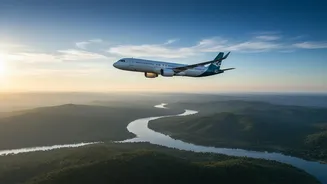







A New Gateway to the West
Starting in early August 2026, Air India Express will operate the first-ever non-stop flights from Guwahati’s Lokpriya Gopinath Bordoloi International Airport (LGBIA) to the United Arab Emirates. The new services include a direct flight to Dubai commencing
August 4 and another to Abu Dhabi starting August 7. The Guwahati-Dubai flight will operate weekly, cutting the travel time significantly. This move marks a major milestone, as it establishes a direct air corridor between Northeast India and the bustling economic hubs of the Middle East, a region that was previously accessible only through connecting flights. With this launch, Guwahati’s international network expands to four countries, adding the UAE to its existing direct connections with Singapore, Thailand, and Bhutan.
The Traditional Gulf Commute
Until now, a journey from anywhere in the Northeast to the Gulf was an exercise in patience. Travellers typically had to book a domestic flight to a major metro like Delhi, Mumbai, or Kolkata, navigate a layover that could last several hours, and then board a connecting international flight. This multi-leg journey often stretched total travel time to anywhere between 10 and 17 hours, depending on the layover city and duration. For instance, a common route through Delhi could easily take over 15 hours from start to finish. This not only added significant time but also complexity, involving potential terminal changes, re-checking of baggage, and the general stress of navigating some of India’s busiest airports. This indirect routing was a major hurdle for business travellers, workers, students, and tourists from the region.
By the Numbers: Guwahati vs. The Hubs
The new direct flights from Guwahati offer a compelling advantage in both time and convenience. A direct flight from Guwahati to Dubai is estimated to take around seven hours, a stark contrast to the double-digit travel times of connecting routes. This effectively halves the journey duration for many passengers. While pricing will fluctuate based on demand, the elimination of a domestic feeder flight leg presents an opportunity for competitive fares. Introductory offers and the general efficiency of a direct route can often translate into cost savings. More importantly, the convenience factor is a game-changer. Passengers can avoid the hassle of layovers and the uncertainty of missing connections, making the travel experience smoother and far less exhausting. This simplified journey is a massive upgrade for those who frequently travel between the Northeast and the Gulf.
More Than Just a Flight
This route expansion is more than a new line on an airline's map; it’s a strategic development with significant economic implications. The direct connectivity is expected to be a major boost for trade, especially for Assam's agricultural and horticultural exports. Perishable goods can now reach markets in the Middle East faster, supported by the growing cargo handling capabilities at Guwahati airport. The new flights are also anticipated to stimulate tourism, both inbound and outbound, and provide easier access for the large workforce from the Northeast employed in the Gulf. This development aligns with broader government initiatives like the UDAN scheme, which aims to enhance regional connectivity, and the 'Act East' policy, by positioning Guwahati as a logistical hub connecting India to both Southeast Asia and now, West Asia.
The Ripple Effect on Regional Travel
The establishment of a direct link to the Gulf by a major carrier like Air India Express could serve as a catalyst for further international expansion from Guwahati. Success on these routes could encourage other airlines, including Middle Eastern carriers like Flydubai, to consider services from the region. It validates the growing passenger demand from Tier-2 cities and strengthens the case for Guwahati to be developed as a genuine international hub. The airport has already seen record passenger growth and a new terminal is being developed to handle increased capacity, setting the stage for more international connections. For travellers in the Northeast, this could mean a future with more direct flight options, greater competition on fares, and a new era of global access right from their doorstep.