





A New Space Race, Fired by Policy
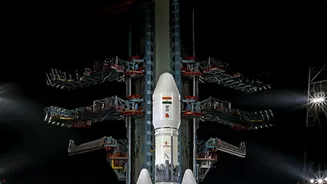
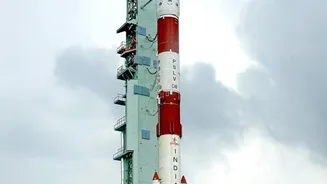
The game changed in 2020. The Indian government unlocked the space sector, traditionally the exclusive preserve of the state-run Indian Space Research Organisation (ISRO), for private enterprise. This wasn't just a minor tweak; it was a seismic shift.
The establishment of the Indian National Space Promotion and Authorisation Centre (IN-SPACe) created a single-window agency to nurture and regulate private players. The message was clear: private companies were no longer just vendors but partners in building India's space future. The result has been an explosion of activity. From a handful just a few years ago, India now boasts over 450 space startups. These companies have attracted significant investment, with funding crossing the $380 million mark in recent years, signaling strong investor confidence in the sector's potential. The goal is ambitious: to grow India’s share of the global space economy from 2% to over 8%, targeting a valuation of $44 billion by 2033.
The Rocket Builders: Skyroot and Agnikul
At the forefront of this revolution are the launch vehicle startups. Hyderabad-based Skyroot Aerospace made history in July 2026 by becoming the first Indian private company to launch a rocket, Vikram-1, into orbit on its maiden attempt. This landmark achievement, a feat not often accomplished globally, demonstrated India's private sector capability to develop complex multi-stage launch vehicles. The Vikram series is designed to serve the booming small satellite market, offering dedicated and cost-effective rides to space. Another key player, Chennai-based Agnikul Cosmos, is also in the advanced stages of developing its Agnibaan launch vehicle. Agnibaan features a unique, single-piece 3D-printed rocket engine, a technology that drastically cuts down manufacturing time and costs. These companies are effectively democratizing access to space by creating what are essentially 'space taxis' for small satellites, reducing the reliance on larger, more expensive ISRO missions.
Eyes in the Sky: Pixxel’s Hyperspectral Vision
Accessibility isn't just about launching rockets; it's also about what we can do from space. Bengaluru-based Pixxel is a global leader in this domain, building a constellation of hyperspectral imaging satellites. Unlike standard cameras, these advanced sensors capture data across hundreds of spectral bands, revealing insights invisible to the naked eye. With a six-satellite 'Fireflies' constellation now in orbit, Pixxel can monitor the planet's health with unprecedented detail, detecting everything from crop stress and illegal mining to water pollution and methane leaks. This data provides actionable intelligence for industries like agriculture, mining, and environmental management. Pixxel is also leading a consortium of Indian companies to build the country's first privately-led national Earth Observation constellation, a major public-private partnership. This makes powerful space-based data accessible to businesses and governments, turning the final frontier into a practical tool for solving problems on Earth.
The Full Ecosystem: Beyond Rockets and Satellites
A truly robust ecosystem requires more than just launch and satellite companies. A deep network of startups is emerging to build the critical infrastructure that supports the entire value chain. Hyderabad's Dhruva Space, for instance, provides full-stack satellite solutions, offering everything from satellite platforms and solar panels to orbital deployers that release satellites from the rocket. They have successfully qualified their technology in space through multiple ISRO missions. Meanwhile, Bellatrix Aerospace in Bengaluru is focused on the crucial technology of in-space propulsion. They build everything from green chemical thrusters to advanced electric propulsion systems and orbital transfer vehicles, which act as space tugs to move satellites to their precise orbital slots. This specialisation creates a layered, resilient industrial base, where one startup's product becomes another's platform, accelerating innovation across the board.
What 'Accessible' Really Means
The growth of these startups makes the final frontier 'accessible' in several key ways. Firstly, it dramatically lowers costs. Private companies are leveraging agile development, new manufacturing techniques like 3D printing, and modular designs to offer launch and satellite services at a fraction of traditional costs. Secondly, it increases frequency and reduces waiting times. Small satellite operators no longer need to wait years to hitch a ride on a large rocket; they can now book dedicated launches on vehicles like Vikram-1 that are tailored to their needs. Finally, it creates an explosion of downstream data applications. Services from companies like Pixxel give Indian industries access to high-fidelity satellite data, driving efficiency in agriculture, urban planning, disaster management, and more. This shift from a government-led to a private-driven model is not just adding capacity; it's creating a dynamic, market-driven ecosystem that fosters innovation from the ground up.