


The Foundation: Choosing the Right Apples
The first step towards a superior crumble is selecting the right apples. This choice will make or break your dessert. Pastry chefs often use a mix of varieties to achieve a complex flavour profile and a desirable texture. The goal is to find apples that
are firm enough to hold their shape during a long bake, preventing the filling from turning into a homogenous mush. Granny Smith apples are a classic choice, prized for their tartness and firm structure, which provides a perfect counterpoint to the sweet, buttery topping. Other excellent options include Jonagold, Honeycrisp, and Braeburn, which all offer a good balance of sweet and tart flavours while staying intact. Varieties to avoid include Red Delicious and McIntosh, which tend to break down and become overly soft when cooked. By cutting the apples into larger, bite-sized chunks rather than thin slices, you further ensure they maintain their integrity.
The Secret Weapon: The Slow Bake
The concept of “slow baking” is central to achieving a deeply flavourful and perfectly textured apple filling. Instead of blasting the crumble at a high temperature, a lower, slower bake allows magic to happen. This gentle heat coaxes the natural sugars out of the apples, caramelizing them slowly and deepening their flavour without turning them to liquid. A slow cooker can even be used to achieve this effect, cooking the apples for hours until they are tender and the flavours have melded beautifully. This method also prevents the common issue of a watery filling, as the juices have more time to thicken and concentrate. While many recipes call for baking at 180°C for 30-35 minutes, extending this time at a slightly lower temperature can yield a much richer, more jam-like filling where the fruit is soft but not disintegrated. This patience is a hallmark of professional baking, where flavour development is paramount.
The Crowning Glory: A Rolled Oat Topping
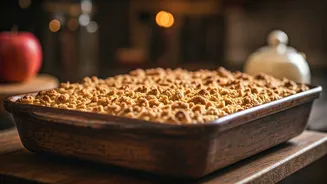
The topping is arguably what makes a crumble so beloved, and the inclusion of rolled oats is a game-changer. While a simple flour, butter, and sugar mixture is traditional, rolled oats provide a superior texture and a rustic, hearty crunch that stands up to the soft fruit beneath. Unlike quick oats, which are smaller and can become soft, old-fashioned rolled oats maintain their shape, resulting in a chewier, more substantial bite. The oats absorb some of the butter and sugar, toasting in the oven to create a golden, fragrant, and incredibly crisp layer. For the best results, use cold butter cut into the dry ingredients until it resembles coarse crumbs. This technique ensures the butter melts slowly in the oven, creating pockets of steam that result in a lighter, more crumbly texture rather than a dense, greasy lid. Some chefs even chill the topping before baking to help the butter solidify, further enhancing that final crunch.
Bringing It All Together
Assembling the perfect crumble is straightforward once you have the components right. After tossing your chosen apples with a touch of sugar, lemon juice, and perhaps a hint of cinnamon, spread them evenly in your baking dish. Don’t be afraid to add other spices like nutmeg or ginger for warmth. Sprinkle the rolled oat crumble topping generously over the fruit, ensuring an even layer that covers the apples completely. The topping will protect the fruit as it bakes, allowing it to stew in its own juices. The sign of a perfectly baked crumble is a golden-brown top and a filling that is bubbling thickly around the edges. This indicates the fruit is cooked through and the juices have thickened to a luscious consistency.