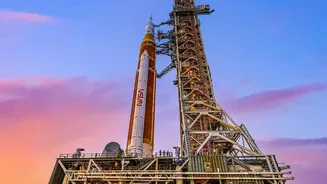






NASA's ambitious plan to return astronauts to the lunar surface has hit a significant snag. The Artemis III mission, once slated to be the historic first landing in over 50 years, has been officially repurposed as an orbital test flight.
A Major Shift in Strategy
In a major strategic
pivot for its lunar ambitions, NASA has confirmed that the Artemis III mission will no longer attempt to land astronauts on the Moon. Instead, the mission, now targeted for the summer of 2027, will serve as a crucial dress rehearsal in low-Earth orbit. This change delays the first crewed lunar landing of the 21st century to the Artemis IV mission, which is tentatively scheduled for 2028. The decision, announced by NASA leadership, reframes Artemis III from a pinnacle achievement to a calculated, risk-reducing step designed to test the complex hardware required for an eventual Moon landing. The original plan was seen by many, including an internal safety panel, as too ambitious, combining too many untested technologies in a single, high-stakes mission far from Earth.
Why the Change of Plans?
The primary reason for this mission redesign is developmental delays and the inherent risks of using unproven technology. Key components, particularly the Human Landing Systems (HLS) being built by private partners SpaceX and Blue Origin, are not ready for a lunar attempt. Neither company's lander would have been ready for the original timeline, prompting NASA to insert this new mission to avoid a long gap in the program and to test the hardware closer to home. By conducting these tests in low-Earth orbit, astronauts can practice critical procedures like rendezvous and docking in an environment where a return to Earth is a matter of hours, not days. This 'crawl-walk-run' approach mirrors the strategy used during the Apollo program, which conducted an Earth-orbit test of its lunar module on Apollo 9 before attempting a landing.
What Is a Docking Demonstration?
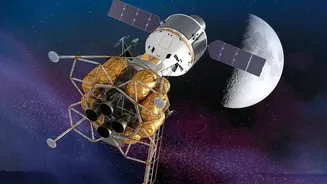
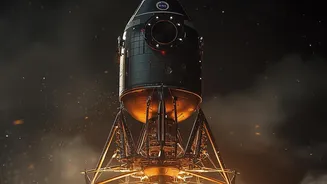
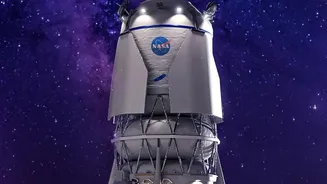
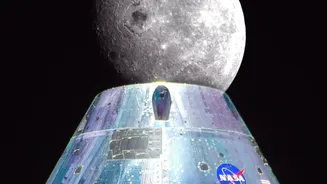
The new Artemis III mission is a complex logistical exercise involving three separate launches. First, Blue Origin will launch a prototype of its Blue Moon lander. Then, the four-person Artemis III crew will launch aboard the Orion spacecraft on NASA's powerful Space Launch System (SLS) rocket. In orbit, the crew will rendezvous and dock with the Blue Moon lander, enter its cabin, and test its life support and control systems. After that, they will perform a similar rendezvous and docking maneuver with a test version of SpaceX's Starship lander. The Starship test article will be a more basic version, primarily to test the docking sequence itself, without a fully functional life support system for the crew to enter. This dual-docking demonstration will provide NASA with invaluable data on how the Orion spacecraft interacts with landers from two different commercial providers.
The New Crew and Timeline
NASA announced the four person crew for this redesigned mission on June 9, 2026. It includes NASA astronauts Randy Bresnik (Commander), Frank Rubio (Mission Specialist), and Andre Douglas (Mission Specialist), along with European Space Agency astronaut Luca Parmitano (Pilot). While the launch is officially targeted for summer 2027, officials acknowledge this is an aggressive 'best case scenario' timeline. The mission is entirely dependent on the readiness of the commercial landers from SpaceX and Blue Origin, which have both indicated their hardware might not be ready until late 2027. This pressure is compounded by what NASA administrator Jared Isaacman describes as a new space race with China, adding urgency to the program's pace. Any significant delays to this 2027 test flight would almost certainly push the Artemis IV lunar landing further into the future.