




The Promise of Absolute Zero
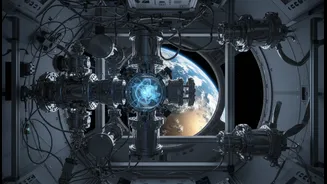
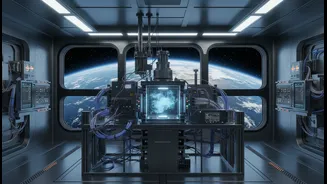
The primary mission of the Cold Atom Lab (CAL) is to explore the strange, counter-intuitive world of quantum mechanics. To do this, it cools atoms down to temperatures just a fraction of a degree above absolute zero—colder than any naturally occurring
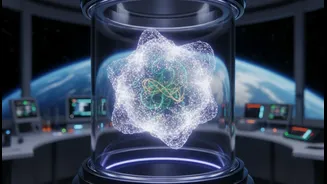
place in the cosmos. At these extreme temperatures, clouds of atoms can enter a bizarre fifth state of matter, distinct from solids, liquids, gases, and plasmas, known as a Bose-Einstein Condensate (BEC). In a BEC, the atoms lose their individual identities and behave like a single, massive quantum wave. This makes their quantum properties, which are usually microscopic, large enough to be observed and studied directly. While scientists have created BECs on Earth since 1995, gravity is a constant problem; the delicate condensates are pulled downwards and dissipate in less than a second, limiting observation time. In the microgravity of the International Space Station, these BECs can float, allowing for observation times of ten seconds or even longer. This extended window is the key benefit, opening the door to experiments that are simply impossible to perform on the ground.
A Harvest of Scientific Breakthroughs
Since its installation in 2018, the CAL has delivered a steady stream of valuable science. It was the first facility to produce a Bose-Einstein Condensate in Earth orbit, a landmark achievement. Since then, five international research teams have used the lab, which is operated remotely from NASA's Jet Propulsion Laboratory, to conduct fundamental physics experiments. The facility has allowed for the creation of exotic quantum gas bubbles—hollow spheres of ultracold atoms that can only exist in microgravity. In late 2023, it successfully created a quantum gas from two different types of atoms (potassium and rubidium), opening up new avenues in quantum chemistry. The research is not purely abstract. These experiments serve as pathfinders for future quantum technologies. Potential applications include developing ultra-precise sensors that could be used for advanced navigation without GPS, perhaps even on the Moon, or for mapping Earth's gravitational fields with unprecedented accuracy. The lab has undergone several upgrades, most recently in 2026, to expand its capabilities, including a redesigned magnetic trap to better manipulate the quantum gases.
The Astronomical Price Tag
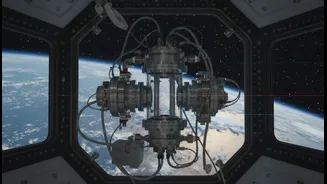
Pioneering science in space does not come cheap. While NASA does not publish a specific line-item cost for the Cold Atom Lab, it is part of the enormous investment that is the International Space Station. The total cost to build and operate the ISS for its first few decades is estimated at around $150 billion, making it the most expensive single object ever built. The annual operating cost for the station runs to about $3 billion for NASA alone, roughly a third of its human spaceflight budget. Individual instruments like the CAL represent a significant investment in design, manufacturing, testing, and launch. Engineers had to shrink what would be a room-sized laboratory on Earth into a compact system the size of a mini-fridge, all while ensuring it could survive the rigors of a rocket launch and operate reliably via remote control. Astronaut time for installation and periodic hardware upgrades is another valuable and limited resource. This high overhead is a fundamental aspect of any space-based research and must be weighed against the scientific return.
Navigating Inherent Limitations
Despite its unique advantages, the Cold Atom Lab faces significant limitations. Its size, power, and complexity are constrained by the realities of operating on the ISS. Ground-based labs, while hampered by gravity, are larger, often more powerful, and can be reconfigured or repaired far more easily by the scientists themselves. The CAL's reliance on remote operation from Earth means experiments must be meticulously planned and executed as automated sequences. While astronauts can perform upgrades, they are not typically involved in the day-to-day science, which limits the flexibility to respond to unexpected results in real time. Furthermore, while microgravity allows for longer observation, the environment is not perfectly free of forces; there are still tiny vibrations and accelerations aboard the station that can disturb the delicate experiments. Ultimately, the CAL is a specialized tool. It excels at a narrow but crucial set of experiments that require long-duration microgravity, but it cannot replace the versatility and hands-on nature of its terrestrial counterparts.