


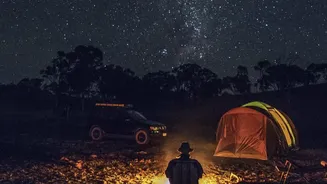
The Glow That Robs Us of the Night
Across India's rapidly growing cities, from Mumbai to Bengaluru, artificial light has become a constant presence. This pervasive illumination, known as light pollution, doesn't just obscure the stars; it has tangible effects on human health and the environment.
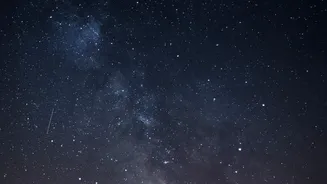
Exposure to artificial light at night disrupts our natural sleep-wake cycles, known as circadian rhythms, by suppressing the production of melatonin. Studies have linked this disruption to sleep disorders, mood alterations, and even an increased risk of chronic health issues. For most of the 500 million Indians living in cities, the Milky Way has become an invisible wonder, a spectacle many children have never witnessed. This loss of connection to the night sky represents more than just a missed celestial view; it's a detachment from a universal heritage that has inspired humanity for millennia.
A Sanctuary for the Stars
In response to this growing problem, a global movement to preserve natural darkness has given rise to 'dark-sky places'. These are designated areas where artificial light pollution is actively controlled to protect the clarity of the night sky. Certified by bodies like the International Dark-Sky Association (IDA), these parks and reserves aren't just for astronomers; they are sanctuaries for nocturnal wildlife and oases for human well-being. India has recently made significant strides in this movement. In January 2024, the Pench Tiger Reserve in Maharashtra was designated as India's first Dark Sky Park, joining a select group of locations in Asia. These parks commit to responsible lighting practices, such as using shielded, downward-facing lamps and warm-toned LEDs to minimize skyglow.
India's Celestial Crown Jewel: Hanle
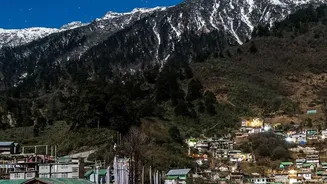
Before Pench's designation, the groundwork for India's dark-sky journey was laid high in the Himalayas. In late 2022, a remote area in Ladakh's Changthang plateau was officially notified as the Hanle Dark Sky Reserve—the first of its kind in India and South Asia. Situated at an altitude of over 14,700 feet, Hanle's dry climate and pristine atmospheric conditions make it one of the best stargazing sites in the world. The reserve, which spans a 22-kilometre radius around the Indian Astronomical Observatory, is a unique collaboration between scientists and the local community. Villagers have been trained as 'astronomy ambassadors' and provided with telescopes, creating a sustainable model of astro-tourism that generates income while preserving the very darkness that makes it possible.
The Rise of Astro-Tourism
The establishment of places like Hanle and Pench is fueling a boom in 'astro-tourism'—travel motivated by the desire to see the stars. For city dwellers, the appeal is multi-faceted. It's an escape from the relentless pace and sensory overload of urban life, offering a chance to experience profound quiet and awe. Stargazing is increasingly seen as a wellness activity, a form of mindfulness that allows people to reconnect with nature and gain a sense of perspective. This trend has also been a boon for remote economies, creating sustainable livelihoods in areas like Spiti Valley, the Rann of Kutch, and parts of Uttarakhand, which are emerging as popular destinations for those chasing meteor showers and Milky Way views.
What to Expect on a Dark-Sky Trip
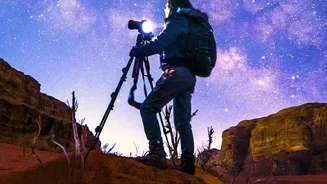
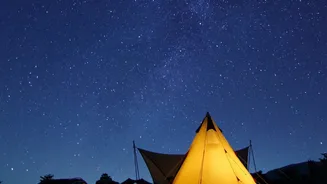
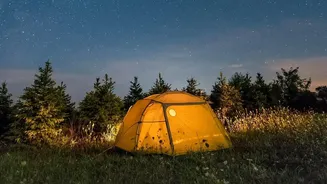
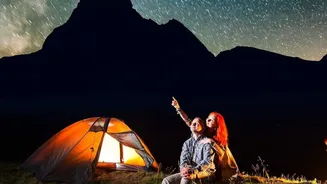
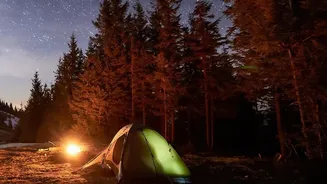
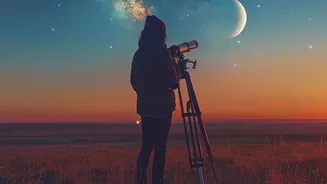
A journey to a dark-sky park is an intentional dive into true darkness. Tour operators and local guides offer curated experiences that go far beyond casual observation. Visitors can participate in guided sessions with powerful telescopes, learning to identify constellations, planets like Saturn with its visible rings, and distant galaxies. Astrophotography workshops are also popular, teaching travelers how to capture the stunning celestial landscape. The experience is immersive; in a place like Pench, the profound silence of the jungle is punctuated by the sounds of nocturnal wildlife, adding another layer to the cosmic spectacle. In Hanle, the sheer brilliance of the Milky Way, bright enough to cast a faint shadow, is a sight that few ever forget.