





Time Capsules from a Frozen World
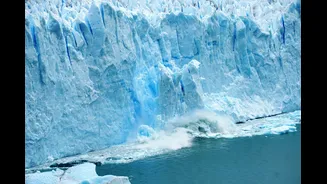
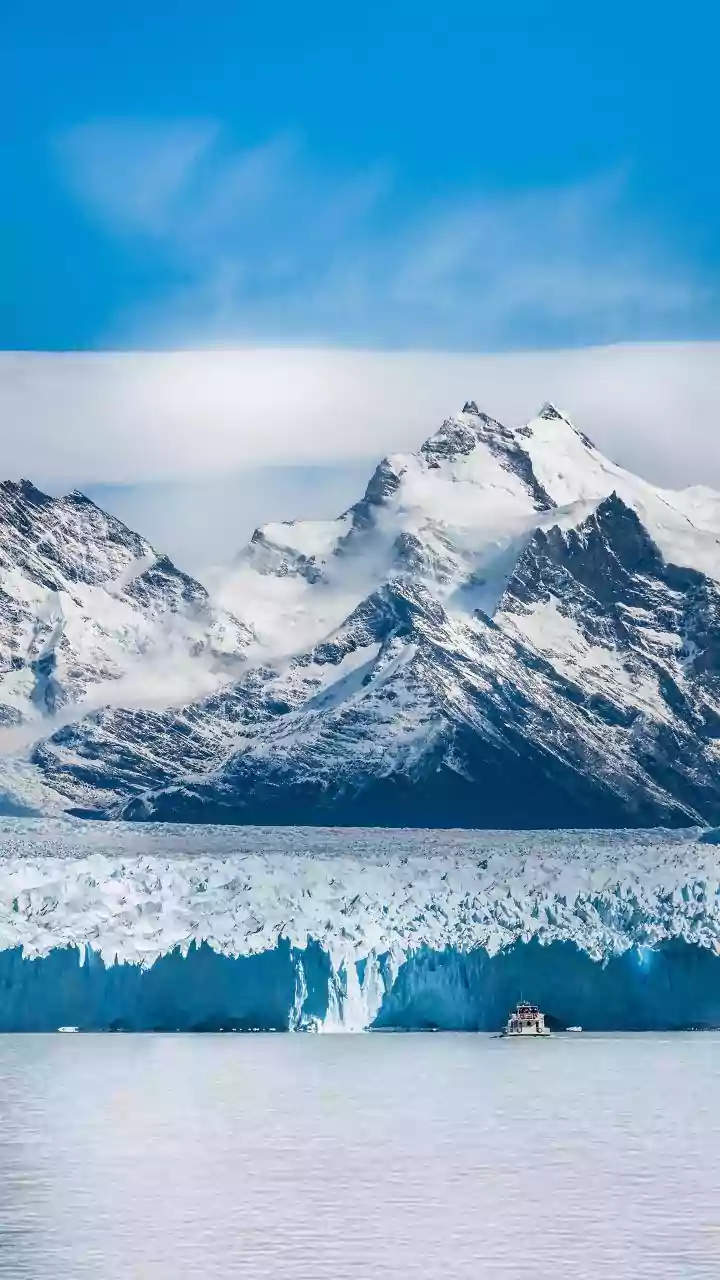
Imagine a library of Earth's history, with each page representing a single year. That's essentially what an ice core is. In places like Antarctica and Greenland, snowfall has been accumulating for hundreds of thousands of years. As new layers of snow fall,
they bury and compress the old layers, eventually forming dense glacial ice. Scientists drill deep into these ice sheets, sometimes over three kilometers, to extract long cylinders of ice. These cores are like frozen time capsules, with the deepest layers representing the most distant past. The longest continuous records go back as far as 800,000 years, giving us an unprecedented window into prehistoric climate.
Tiny Bubbles with Big Secrets
The real magic of ice cores lies in what's trapped inside: tiny, perfectly preserved bubbles of air. When snow compacts into ice, it traps small pockets of the surrounding atmosphere. These bubbles are a direct sample of what the air was like when the ice formed. By analyzing these bubbles, scientists can measure the exact composition of the atmosphere from centuries or millennia ago. This includes the concentration of key trace gases, which are gases present in very small amounts but have a significant impact on the planet's climate. The most important of these are greenhouse gases like carbon dioxide (CO2), methane (CH4), and nitrous oxide (N2O).
The Delicate Art of Analysis
Extracting information from these ancient air bubbles is a meticulous process conducted in ultra-clean labs. Scientists carefully cut sections of the ice core and place them in a vacuum chamber. They then either melt the ice or use a sublimation technique (turning the ice directly into vapor) to release the trapped gases without contamination. The released air is then fed into highly sensitive instruments, such as a mass spectrometer or laser spectrometer, which can precisely measure the concentration of each different gas. This allows researchers to build a detailed, year-by-year timeline of how atmospheric composition has changed over time.
Mapping a Pre-Industrial World
The data from ice cores is crucial for establishing what scientists call a 'pre-industrial baseline'. This is a clear picture of what Earth's atmosphere was like before the late 18th century, when human activity, particularly the burning of fossil fuels, began to significantly alter its composition. Ice core data shows that for hundreds of thousands of years before the Industrial Revolution, atmospheric CO2 levels naturally fluctuated between about 180 and 280 parts per million (ppm). Methane concentrations also followed a stable, predictable pattern. This baseline represents the natural state of the climate system.
Why This Ancient Air Matters Today
By establishing a clear pre-industrial baseline, ice core analysis puts our current situation into stark context. The data confirms that the concentration of CO2 and methane in the atmosphere was remarkably stable for millennia until around the 19th century. Since then, levels have risen at a rate and to a magnitude that is unprecedented in the 800,000-year record. Current CO2 levels are nearly 40% higher than they were before industrialization. This is not a matter of opinion or a computer model; it is a direct measurement of past and present atmospheres. This stark contrast between the natural baseline and our modern reality provides the most powerful evidence of human impact on the global climate, forming the bedrock of climate science and policy discussions worldwide.