







Why Early Intervention is Critical
A mild unease during a storm can seem minor, but fear in dogs often worsens over time. What starts as slight restlessness can grow into a full-blown phobia, complete with destructive behavior and intense panic. This is because fear responses can become
learned and conditioned, making them harder to treat the more they are repeated. By noticing the first hints of anxiety, you can intervene before the fear becomes deeply ingrained. Acting early is not just more effective; it's a kinder way to help your pet feel secure, preventing years of escalating stress for both them and you.
The Subtle Signs of Early Anxiety
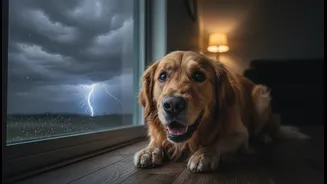
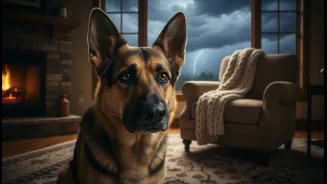
Long before the obvious shaking and hiding begins, your dog may be communicating its discomfort in much quieter ways. Many of these signals are so subtle they are easily missed. Be watchful for behaviors that are out of context, such as yawning when not tired, excessive lip-licking, or a sudden intensity in their gaze as they try to locate the source of a distant sound. Other early indicators include mild restlessness, a tendency to stay closer to you than usual, lowered ears, and showing less interest in play or treats. Some dogs may even start panting long before the storm is audible to human ears, sensing changes in barometric pressure.
When Anxiety Becomes Obvious
If early signs are missed, thunder anxiety often progresses to more dramatic and distressing behaviors. These are the signs that are impossible to ignore. Obvious symptoms include trembling or shaking, uncontrollable panting, and whining or barking. An anxious dog will often seek out a place to hide, such as a closet, bathroom, or under a bed. In more severe cases, you might see destructive actions like scratching at doors and windows, or attempts to escape the house. Some dogs become so panicked they may urinate indoors or refuse to eat.
Simple Steps for Early Management
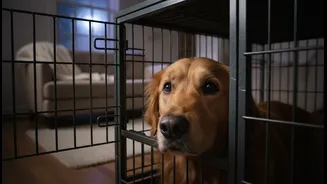
When you notice the first signs of anxiety, you can take immediate steps to create a sense of security. First, create a 'safe haven' for your dog—a cozy, interior room or crate away from windows where they can retreat. Make it comfortable with their favorite blankets and perhaps an item of your clothing for a familiar scent. Masking the noise of the storm with white noise, a fan, or calming classical music can also be very effective. Another helpful tool is a calming compression wrap or vest, which applies gentle, constant pressure that can soothe an anxious dog. Offering a high-value chew toy or a food puzzle can also provide a positive distraction.
When to Seek Professional Help
While early management can make a huge difference, some dogs have a level of anxiety that requires professional support. If your dog's fear is severe, causes destructive behavior, or puts them at risk of injury, it is time to consult your veterinarian. A vet can rule out any underlying medical issues and discuss a comprehensive plan. This might include behavioral modification strategies like desensitization and counter-conditioning, which help change your dog's emotional response to the storm. In some cases, your veterinarian may recommend anti-anxiety supplements, pheromone diffusers, or prescription medications to help your dog cope during storms.