







What is Corn-Based Cat Litter?
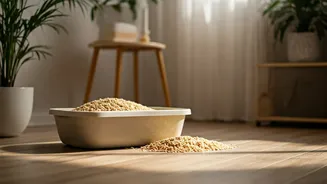
Unlike traditional litters mined from the earth, corn-based cat litter is exactly what it sounds like: a litter made from finely ground or pelleted dried corn. Often manufactured from the parts of the cob that are inedible for humans, it repurposes an agricultural
byproduct into a highly absorbent and functional material. This natural origin is its main selling point, offering a stark contrast to the heavy bags of bentonite clay that have dominated the market for decades. The manufacturing process typically involves compressing the corn into granules that are lightweight, porous, and designed to absorb moisture and clump effectively.
The Environmental Argument
The primary driver behind the switch is sustainability. Traditional clumping litter is made from sodium bentonite, a type of clay that is sourced via strip mining. This is an environmentally disruptive process that removes large sections of topsoil and vegetation, impacting ecosystems. Furthermore, clay litter is not biodegradable. Every scoop you throw out ends up in a landfill, where it will sit for thousands of years. In a country grappling with landfill capacity, this is a significant concern. Corn, on the other hand, is a renewable resource. Corn-based litters are biodegradable and compostable (though it’s strongly advised not to compost cat waste at home due to pathogens like toxoplasma gondii). For eco-conscious consumers, choosing a product that comes from a renewable plant source and won't sit in a landfill forever is a powerful motivator.
Benefits Beyond Being Green
While the environmental angle is strong, many users stick with corn litter for its practical benefits. One of the most celebrated features is that it's virtually dust-free. The fine silica dust from clay litters can trigger respiratory issues in both cats and their owners, coating every surface in your home with a fine, gritty film. Corn litter eliminates this problem, making for a cleaner home and healthier air. It’s also significantly lighter than clay, making it easier to carry, pour, and dispose of. Proponents also rave about its natural odour control. The porous structure of the corn granules traps ammonia smells effectively, often with a subtle, natural scent of its own instead of the heavy artificial perfumes found in many clay litters.
Potential Downsides and Considerations
No product is perfect, and corn litter has its own set of challenges. The most significant barrier is often the price; it tends to be more expensive than basic clay litters, which can be a deciding factor for many households. Another common concern is that some cats, being creatures of habit, may not take to the new texture or scent. The clumps formed by corn litter can also be softer than the rock-hard clumps of bentonite clay, sometimes breaking apart during scooping if not handled carefully. Finally, some online discussions mention a concern about aflatoxins, a type of mould that can grow on corn. However, reputable manufacturers use heat-treatment processes and test their products to ensure they are safe for pets.
Making the Switch Smoothly
If you’re considering making the change, a gradual transition is key to ensuring your feline friend accepts the new material. Cats can be finicky about their bathroom environment, and a sudden change can lead to them avoiding the litter box altogether. Start by mixing a small amount of the new corn litter (about 25%) with their current clay litter. Over a period of one to two weeks, gradually increase the ratio of corn litter to clay litter until the box is filled entirely with the new product. Monitor your cat’s behaviour closely during this period. As long as they continue to use the box without issue, you can proceed with the transition. This slow and steady approach gives them time to get used to the different texture and scent under their paws.