

Europe's Great Eclipse
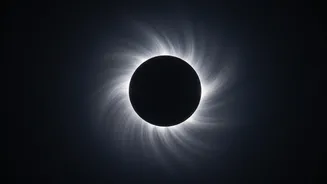
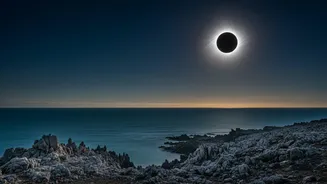
This isn't just any eclipse; it's the first total solar eclipse to be visible over mainland Europe since 1999. The path of totality, where the Moon completely obscures the Sun, will journey across remote parts of the Arctic, Greenland, Iceland, and then,
most accessibly, over northern Spain. Cities like Valencia, Zaragoza, and Bilbao will witness the sky darken dramatically just before sunset. For those in the direct path, the event will offer a rare view of the Sun's corona—its ethereal outer atmosphere—for up to 2 minutes and 18 seconds. This brief window provides a unique opportunity for scientists and a breathtaking experience for viewers.
When to Watch From India
For viewers in India, the eclipse occurs late in the evening of August 12, extending into the early hours of August 13. The entire event, from the first moment the Moon touches the Sun's disk to the last, spans several hours. The partial phase of the eclipse is set to begin at 9:04 PM IST on August 12. The most exciting part, the beginning of the total eclipse, kicks off at 10:28 PM IST. The moment of maximum eclipse, when the Sun is most obscured, will happen at approximately 11:16 PM IST. The event concludes in the early morning of August 13, with the partial phase ending at 1:28 AM IST. Since this will be nighttime in India, online streaming is the only way to witness it.
Your Front-Row Seat: NASA's Live Broadcast
NASA is the go-to source for watching the eclipse live. The US space agency will host a comprehensive livestream across its platforms, including NASA+ and its official website. Their coverage is scheduled to begin at 1:15 p.m. EDT, which translates to 10:45 PM IST on August 12. The broadcast will feature live telescope feeds from various locations along the path of totality, including Iceland and Spain. This multi-location setup increases the chances of clear views, regardless of local weather in any single spot. Viewers can expect expert commentary from NASA scientists, who will explain the science behind the eclipse and answer questions submitted via social media.
Other Ways to Watch Online
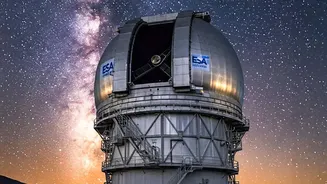
While NASA offers a premier viewing experience, it’s not the only option. The European Space Agency (ESA) will also be hosting its own live broadcast, given that the event is centred over Europe. The ESA's stream will originate from the Observatorio Astrofísico de Javalambre in Spain, well within the path of totality. Their coverage begins at 19:30 CEST (11:00 PM IST) and will be available on ESA Web TV and their YouTube channel. Additionally, astronomy resource timeanddate.com plans to host its own live feed, a popular option for many past celestial events. These multiple streams ensure that anyone with an internet connection can find a reliable and spectacular view.
More Than Just a Pretty Sight
A total solar eclipse is a significant scientific event. It allows researchers a rare, ground-based opportunity to study the Sun's corona, which is normally hidden by the Sun's bright face. During the August 12 eclipse, NASA will use a high-altitude WB-57 research aircraft to chase the Moon's shadow, capturing high-resolution images of the corona to study its structure and the processes that drive space weather. This research helps scientists better understand our star and its powerful influence on Earth, from our daily lives to critical infrastructure like satellites and communication systems. By tuning into the livestream, you are not just watching a beautiful phenomenon; you are witnessing science in action.