


More Than Just Disappearing Land
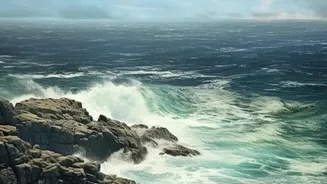
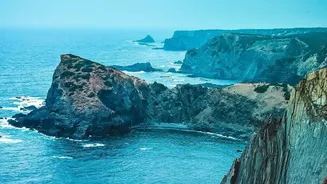
For anyone living along a coastline, the threat of erosion is a tangible one. It reshapes maps, undermines infrastructure, and forces communities to retreat. Traditionally, the costs are measured in lost property and displaced populations. However, scientists
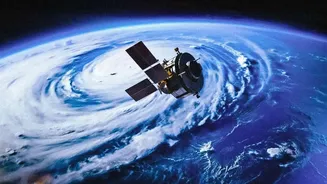
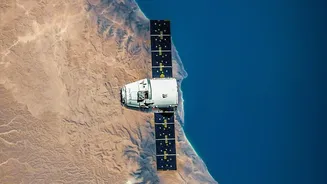
are now uncovering a hidden climate consequence locked within these crumbling coastlines. New research supported by NASA is revealing that as coastlines erode, they release vast quantities of carbon that have been stored for millennia, adding a complex new dimension to our understanding of the global carbon cycle. This process turns a physical problem into a chemical one, with potential ramifications for the entire planet.
The Arctic's Frozen Carbon Vault
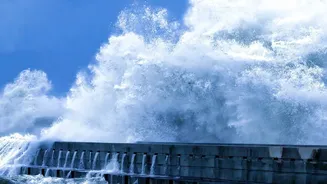
Much of this groundbreaking research focuses on the Arctic, where coastlines are eroding at a particularly alarming rate. The secret lies in permafrost—a layer of soil, rock, and organic matter that remains frozen year-round. Arctic permafrost is a massive natural vault, holding an estimated 1.7 trillion tons of carbon, roughly double the amount of carbon currently in the atmosphere. As global temperatures rise, this permafrost thaws, making coastal cliffs unstable and highly susceptible to erosion from waves and storms. When these ice-rich bluffs collapse into the sea, they release enormous amounts of ancient, organic material that has been locked away since the last ice age.
What the Latest Research Found
One recent study, conducted near Canada's Herschel Island, examined what happens to this ancient carbon once it enters the ocean. Scientists had feared that marine microbes would rapidly consume the organic matter, releasing it as carbon dioxide and creating a powerful greenhouse effect. By analyzing sediment cores from the seafloor, researchers discovered a more nuanced reality. The findings, published in Nature Geoscience, show that while some carbon is converted to greenhouse gases, a significant portion—perhaps as much as 90% in the area studied—settles on the seafloor and is buried in sediment. However, this isn't entirely good news. Researchers caution that as the pace of erosion accelerates with continued warming, the sheer volume of carbon entering the ocean will inevitably lead to more greenhouse gas emissions than in the past. The process is complex, but the net effect is adding a new source of carbon to the climate equation.
A Vicious Climate Feedback Loop
This phenomenon creates a dangerous positive feedback loop. Global warming, driven by human-caused greenhouse gas emissions, accelerates the thawing of permafrost. This thawing leads to increased coastal erosion, which releases more ancient carbon into the environment. A portion of this carbon becomes carbon dioxide or methane, greenhouse gases that then contribute to further warming, which in turn causes even more permafrost to thaw and erode. This self-reinforcing cycle has the potential to turn the Arctic from a carbon sink—an area that absorbs more carbon than it releases—into a net carbon source, making it even harder to meet global climate targets.
Beyond the Arctic: A Global Concern
While the most dramatic effects are seen in the Arctic, the link between erosion and carbon release is a global issue. NASA-supported studies along the U.S. coast from Texas to Maine have found that eroding coastal wetlands and marshes are releasing significant amounts of carbon. Research indicates a net loss of around 380,000 metric tons of carbon annually from these ecosystems, most of which enters the ocean. These habitats, often called "blue carbon" ecosystems, are incredibly efficient at storing carbon in their soils. When they are degraded or destroyed by erosion, development, or rising sea levels, that stored carbon is re-exposed and can be released. For a country like India, with its vast coastline, extensive mangrove forests like the Sundarbans, and delicate marsh ecosystems, these findings are a critical reminder of the importance of coastal preservation not just for protection from the sea, but for climate stability as well.