



The Modern Reporter's Bottleneck
Today's journalists are expected to be masters of all trades: finding sources, conducting interviews, shooting photos, and writing clean copy on ever-tighter deadlines. The traditional process involves layers of work that create a significant bottleneck.
A reporter conducts an interview, then spends precious time transcribing that audio, and only then begins to write the story. Every minute spent manually typing out quotes is a minute not spent on deeper reporting, fact-checking, or crafting a compelling narrative. This typing bottleneck not only slows down the filing of breaking news but also introduces the risk of errors and lost context as details fade from memory. In a world of information overload, finding ways to streamline this process is no longer a luxury but a necessity for staying competitive.
What 'Clean Dictation' Really Means
Clean dictation isn't just about avoiding mumbling; it's a deliberate technique for speaking in a way that is optimised for transcription, whether by an AI service or a human. It involves speaking clearly at a steady, natural pace and, crucially, including verbal commands for punctuation. Instead of letting sentences run together, a reporter might say, "The investigation is ongoing comma authorities said period new paragraph." This practice also involves spelling out proper nouns, technical terms, or ambiguous names to prevent errors. The goal is to produce a raw audio file that is as easy as possible to convert into a well-formatted, accurate document, minimising the time spent on corrections and edits later. Developing a consistent style for dictation makes the entire process more routine and less prone to errors.
Choosing the Right Tools for the Job
The market for dictation and transcription tools has exploded, offering reporters a range of options to fit their workflow and budget. Many journalists now rely on AI-powered transcription services like Otter.ai, Trint, and Sonix, which can turn hours of audio into a searchable text document with speaker identification. Some of these tools are purpose-built for journalists, with features for collaboration and ensuring the confidentiality of sensitive sources. For live dictation, reporters can use built-in features on their devices, such as Google Docs Voice Typing or Apple Dictation, to draft stories directly into a document at the speed of speech. These tools can increase writing speed by three to four times compared to average typing. The best choice depends on the specific need, from transcribing a lengthy interview to quickly drafting a breaking news story from the field.
Actionable Tips for Clearer Audio
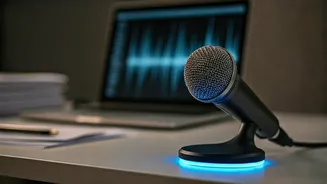
The quality of a transcript starts with the quality of the recording. To ensure accuracy, find a quiet space and minimise background noise by closing doors and silencing device notifications. Using a dedicated external microphone instead of a laptop's built-in one can dramatically improve audio clarity. When dictating, position the microphone a consistent distance from your mouth and speak clearly, as if you were talking to a person across a desk. Plan your thoughts before you begin speaking to create a more coherent and structured recording. A few simple habits—like pausing briefly between sentences and avoiding talking over others in a recorded conversation—can make a significant difference, saving hours of frustrating clean-up work and ensuring the final transcript is reliable.
Beyond Speed: The Other Key Benefits
While the most obvious advantage of clean dictation is speed, the secondary benefits are just as impactful. By reducing the tedious work of manual transcription, journalists free up significant mental bandwidth. This allows them to focus on higher-level tasks like story structure, narrative flow, and critical analysis. Dictating notes or a first draft immediately after an interview or event helps capture details and nuance while they are still fresh. This leads to more accurate quotes and richer storytelling. Furthermore, a well-organised archive of transcribed interviews becomes a searchable, valuable resource for future stories. Ultimately, mastering dictation isn't just about working faster; it's about maintaining creative momentum and producing higher-quality journalism.