

1. Plan Your Design First
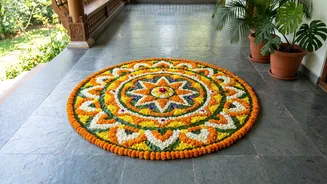
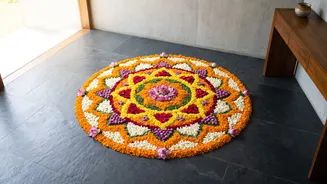
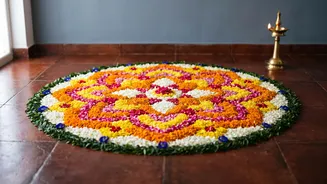
Before you buy a single petal, sketch out your pookalam design. A well-thought-out plan helps you estimate exactly how many flowers you need, preventing overbuying. Simple, traditional designs with concentric circles or basic geometric shapes often require
fewer flowers than intricate, free-form patterns. Use chalk to draw the outline on your floor first. This ensures your design is symmetrical and allows you to visualize the final look, helping you allocate colours and quantities effectively. Planning a simpler or smaller design is one of the easiest ways to manage costs without sacrificing beauty.
2. Embrace Local and Seasonal Flowers
The price of flowers like marigolds (jamanthi), jasmine (mullappoo), and chrysanthemums can fluctuate based on demand and supply from neighbouring states. Opting for locally grown, seasonal flowers can significantly cut costs. Explore your local market for blooms that are in abundance, as they will be fresher and more affordable. Flowers like hibiscus (chemparathy), butterfly pea (shankhupushpam), and pagoda flower (krishnakireedam), which might be growing in your own neighbourhood, are excellent traditional choices that add authenticity and save money.
3. Forage from Your Own Garden
One of the most cost-effective strategies is to look no further than your own backyard or balcony garden. Many homes have flowering plants that are perfect for a pookalam. Fragrant jasmine, vibrant hibiscus, colourful bougainvillaea, and ixora (chethi) can all be sourced for free. This approach not only saves money but also connects your pookalam directly to your home, adding a personal touch. Traditionally, pookalams were made with flowers gathered from the immediate surroundings, a practice that is both sustainable and economical.
4. Use Green Leaves for Volume and Contrast
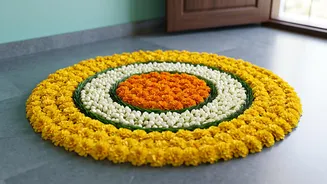
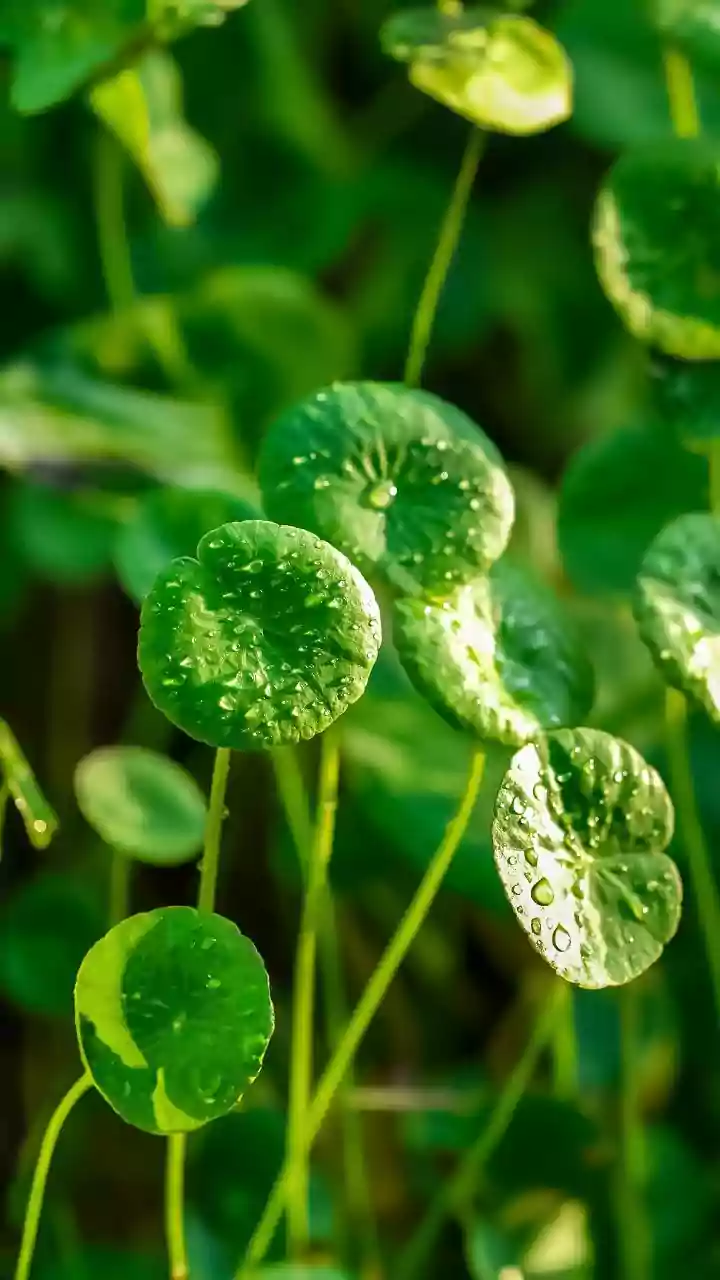
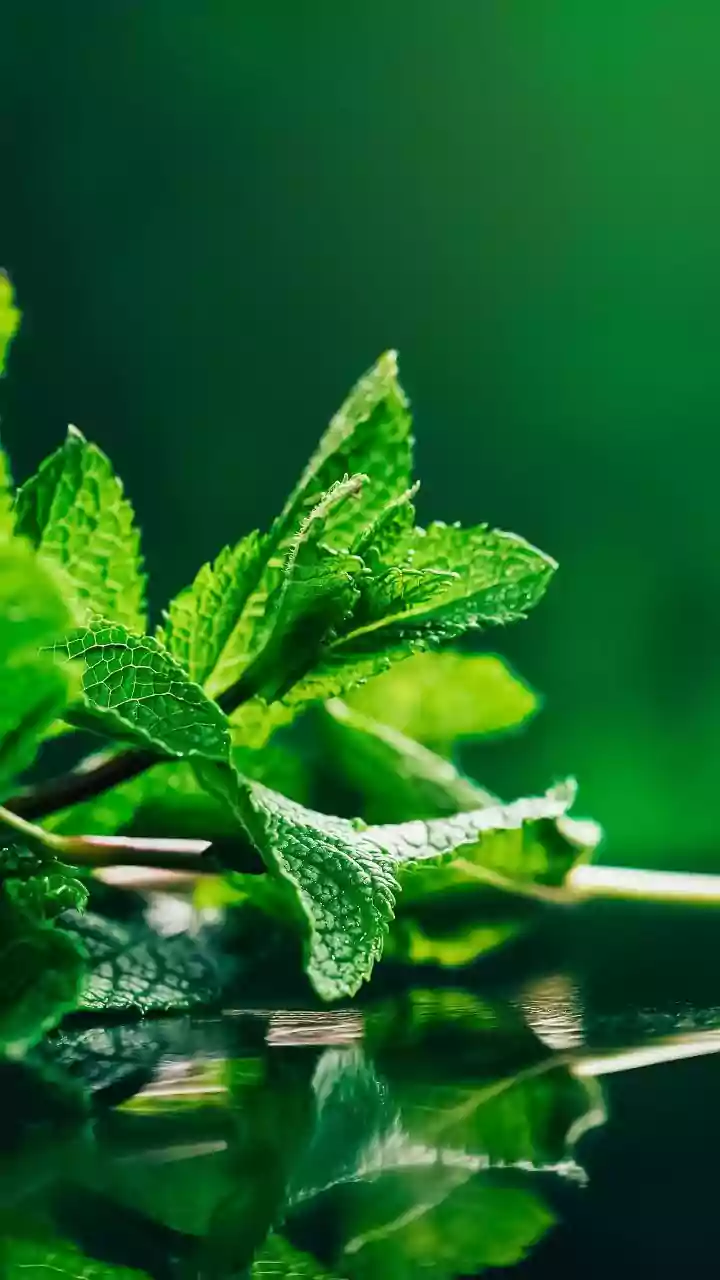
Flowers don’t have to do all the work. Incorporating colourful and shapely leaves is a brilliant way to add volume, texture, and contrast to your pookalam at a fraction of the cost. The deep green of tulsi, mango leaves, or other ornamental foliage can make the colours of your flower petals pop. Use leaves to create borders between different coloured sections, which helps create clean lines and makes your design look fuller. This technique reduces the total quantity of expensive petals needed while adding a lush, natural element to your creation.
5. Get Creative with Alternative Fillers
For larger pookalams or to fill in certain sections, think beyond petals. While traditional designs primarily use flowers, modern interpretations sometimes incorporate other natural materials to great effect. Coloured sawdust, rice flour, or even coloured rice can be used to add hues like blue or deep purple that are hard to find in common flowers. Spices like turmeric powder can provide a brilliant, natural yellow. These fillers can cover large areas with vibrant colour, reducing your reliance on costly flowers for bulk and allowing you to save the best petals for detailed work.
6. Buy from Wholesale Markets—and Go Early
If you need to buy flowers in larger quantities, skip the local florist and head straight to a wholesale flower market. Markets like those in Thiruvananthapuram, Kochi, or Kozhikode see fresh stock arrive in the early morning hours. Buying directly from these markets at dawn can help you get fresher flowers at much lower prices than retail stores or pre-packaged kits. If you live in an apartment complex or a close-knit community, consider pooling money with neighbours to buy in bulk and share the bounty. This collaborative approach not only splits the cost but also fosters a sense of community spirit.
7. Opt for a Smaller, More Intricate Pookalam
Bigger isn't always better. A small, densely packed, and intricately designed pookalam can often be more visually striking than a large, sparse one. Concentrate your efforts and your flower budget on creating a compact masterpiece at your doorstep or in a corner of your living room. Traditionally, the pookalam starts small on the first day, Atham, and grows with a new layer each day. Following this practice naturally manages costs, as you only need a small number of flowers to begin with, gradually adding more as you approach Thiruvonam.