


Reading the Rainbow of Light
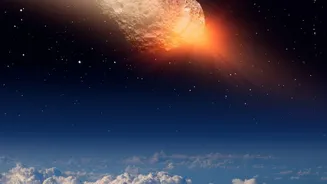
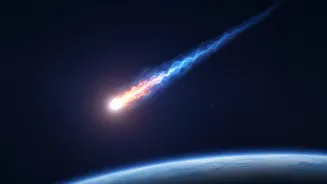
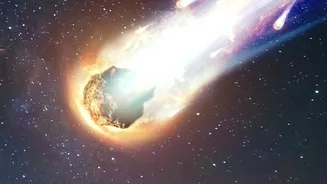
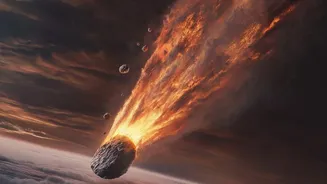
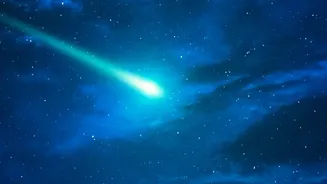
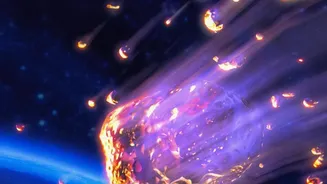
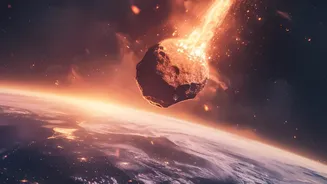
As a meteoroid, a small rock from space, plunges into our atmosphere at speeds up to 72 kilometres per second, it burns up due to immense friction and compression of the air. This process, called ablation, creates a brilliant streak of light. Scientists
use a technique called spectroscopy to analyse this light, splitting it into its constituent colours, much like a prism creates a rainbow. Each chemical element burns with a unique colour signature. By reading these signatures, researchers can determine the meteoroid's composition, identifying elements like iron, magnesium, calcium, and sodium. This tells them about the parent body—the asteroid or comet the meteoroid came from—providing clues about the building blocks of our solar system.
Probing the Unreachable Atmosphere
Meteors provide a unique way to study a mysterious part of our own planet: the upper atmosphere, specifically the ionosphere, at altitudes between 80 and 120 kilometres. This region is too high for weather balloons and too low for satellites, which would be dragged down by atmospheric friction. As a meteor zips through, it leaves behind a trail of ionised gas, or plasma. Scientists can bounce radar signals off these trails to measure wind speed and direction in this hard-to-reach layer. The rate at which the meteor slows down also reveals crucial information about air density, giving us a clearer picture of the atmospheric conditions high above our heads.
A Blueprint for Safer Spacecraft
The same process that destroys a meteor—ablation—is harnessed to protect astronauts and spacecraft. When a capsule returns to Earth, it faces the same intense heat and pressure. Engineers design ablative heat shields that are made to burn away in a controlled manner, carrying excess heat away from the vehicle. Studying how different materials in meteors vaporize and break apart provides invaluable natural data. It helps engineers refine the materials and designs for heat shields, like the PICA (Phenolic Impregnated Carbon Ablator) used on missions like SpaceX's Dragon capsule and NASA's Mars rovers. Understanding how meteors behave helps ensure our own spacecraft can survive the fiery plunge home.
An Early Warning for Bigger Threats
While the millions of tiny meteors that enter our atmosphere daily pose no threat, they are crucial for planetary defense. By studying how these smaller objects fragment and disintegrate, scientists can build and refine computer models that predict what might happen if a much larger, potentially hazardous asteroid were on a collision course with Earth. The 2013 Chelyabinsk event in Russia, caused by an object only about 20 metres wide, highlighted the danger even from relatively small airbursts. Observing the trajectories, break-up altitudes, and energy release of smaller meteors allows agencies like NASA's Planetary Defense Coordination Office to better assess risks and develop strategies to mitigate potential impacts from their larger, more dangerous cousins.