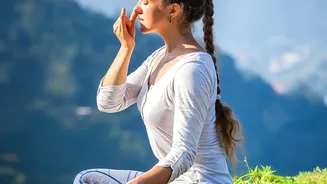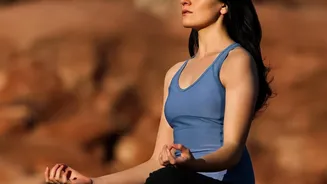






The Goal: Stable, Not Stiff
Before exploring specific postures, it’s important to understand the 'why'. The ideal meditation posture is one you can hold with steady attention and reasonable comfort. The aim is to create a physical foundation that allows you to forget about your
body and focus on your breath. A good posture supports a state of relaxed alertness; a slouched or strained position can create mental restlessness. The key is to find a position that feels both stable and sustainable, where your spine is upright but your muscles are not working hard to hold you there. Think 'dignified' and 'upright,' not rigid. Remember that consistency is more important than the length of each session, so finding a truly comfortable seat is essential for building a regular practice.
The Golden Rule: Hips Higher Than Knees
The single most important principle for comfortable sitting is to ensure your hips are higher than your knees. When you sit flat on the floor, your pelvis tends to roll backward, causing your lower back to round. This forces the muscles along your spine to work overtime to keep you upright, leading to aches and fatigue. By elevating your sitting bones on a cushion, folded blanket, or block, you encourage the pelvis to tilt slightly forward. This allows your spine to maintain its natural curve, stacking vertically with minimal muscular effort. This one adjustment can solve the majority of back pain issues experienced during seated meditation.
Option 1: The Accessible Chair
Meditating in a chair is not a compromise; it is a valid and highly effective option for beginners and experienced practitioners alike. To do it correctly, sit toward the front edge of the chair, which helps your pelvis tilt forward naturally. Plant both feet flat on the floor; if they don’t reach, place a cushion or folded blanket underneath them to ensure your thighs are roughly parallel to the ground. Your spine should be upright, supporting its own weight rather than slumping against the backrest. If you have a weak back, you can place a small, firm pillow behind your lower back for light support. This position provides stability while keeping the spine aligned and alert.
Option 2: Cross-Legged on a Cushion
The classic cross-legged position, or Sukhasana (Easy Pose), is what many people picture when they think of meditation. The key, again, is support. Never sit directly on the floor unless you are exceptionally flexible. Instead, sit on the edge of a firm meditation cushion (zafu), a stack of folded blankets, or a yoga block. This elevation allows your hips to open and your knees to drop down comfortably, ideally below your hips. If your knees still feel strained or float high in the air, slide additional support like blocks or rolled-up blankets directly under them. Don't force your body into a lotus position; a simple, loose crossing of the ankles is all that's required.
Finding Your Alignment
Once you've chosen your base, fine-tune your upper body. Imagine a straight line from your hips, through your shoulders, to your ears. Let your shoulders relax and drop away from your ears. Keep your head balanced over your spine with your chin slightly tucked, not jutting forward. Your hands can rest on your thighs, with palms facing up or down, or in your lap; choose whatever position doesn't create tension in your arms or shoulders. Your eyes can be gently closed or you can maintain a soft, unfocused gaze on a spot a few feet in front of you. The goal is to release any unnecessary tension from your jaw, face, and shoulders.