






A New Dawn, on Demand
The U.S. Federal Communications Commission (FCC) has granted California-based startup Reflect Orbital a license to test a revolutionary, and controversial, piece of space technology. The company plans to launch a satellite, named Earendil-1, carrying
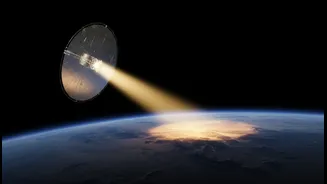
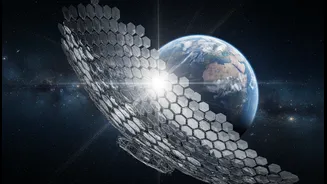
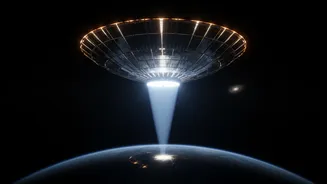
a massive, foldable mirror measuring approximately 60 by 60 feet. Once in low-Earth orbit, this mirror will unfurl and be used to redirect sunlight onto targeted areas on the ground during the night. This initial approval is for a single demonstration satellite, a crucial first step for a company that envisions a future constellation of potentially 50,000 such mirrors surrounding the planet.
The Promise of Perpetual Light
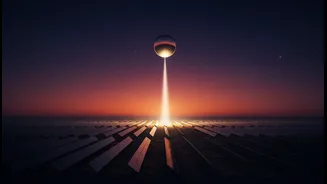
Reflect Orbital's vision is to sell 'sunlight as a service'. The potential applications are vast and transformative. The company suggests its technology could allow solar farms to continue generating clean energy long after sunset, dramatically increasing their efficiency. In the event of a natural disaster, these space mirrors could illuminate search-and-rescue operations in areas without power. Other proposed uses include lighting up large, night-time construction sites to improve safety and productivity, and even providing tailored light to boost agricultural yields. For these tests, the Earendil-1 satellite is designed to cast a beam of light about three miles wide on the Earth's surface.
A Shadow Cast on Science
Despite the potential benefits, the project has drawn a flood of opposition, particularly from the scientific community. Astronomers are sounding the alarm, warning that creating artificial bright spots in the night sky could be catastrophic for their research. The American Astronomical Society has argued that the reflections could overwhelm sensitive telescopes, making it impossible to study faint, distant objects. There are also fears that an errant beam could cause temporary 'flash blinding' for pilots and drivers, or even eye damage to amateur astronomers using telescopes. Beyond astronomy, ecologists and sleep researchers worry about disrupting the circadian rhythms of humans and wildlife, which are governed by natural light-dark cycles.
The Regulatory Challenge
The FCC's approval has highlighted a growing challenge in the new space race: how to regulate activities that push the boundaries of technology and environmental stewardship. The commission received over 1,800 public comments, most of them objecting to the plan. However, the FCC stated that its authority is primarily focused on regulating radio spectrum use, not the light reflected by a satellite. In its decision, the agency framed the approval as supporting an innovative technology that could advance American leadership in space, consistent with its mandate to encourage new services. This case sets a precedent for how novel space ventures, which have direct impacts on the Earth's environment, will be handled in the future.
An Old Idea, A New Frontier
The concept of a space mirror isn't entirely new. In 1993, Russia conducted a brief experiment with a similar, albeit larger, reflector to extend daylight hours in Siberia. That program was ultimately abandoned after a subsequent mission failed. Reflect Orbital is now picking up the torch, backed by venture capital and equipped with modern technology. The company has stated its intention to work with organizations to create 'exclusion zones' around observatories and other sensitive areas. This single test satellite, Earendil-1, will provide the first real-world data on the feasibility and impact of this ambitious technology. The results will be closely watched by supporters and critics alike, as they could determine whether our nights will remain naturally dark or become a new frontier for commercial enterprise.