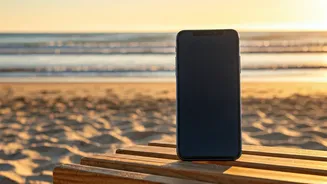









The Myth of a 'Connected' Vacation
We tell ourselves that staying connected is essential. We need to check work emails, post a photo so family knows we’re okay, or look up the best nearby restaurant. While technology can be a useful tool, it has a way of becoming the main event. Every
notification, every buzz, every mindless scroll pulls your brain out of the present moment. Psychologists call the lingering effect of a switched task “attention residue.” When you glance at a stressful work email, a piece of your focus stays with the inbox, preventing you from fully immersing yourself in the conversation, the meal, or the view in front of you. You’re physically on vacation but mentally, you’re still tethered to the digital world, never truly allowing your mind to rest and recharge.
The Comparison Trap Hiding in Your Feed
One of the most insidious thieves of joy on vacation is the comparison trap, fueled almost entirely by social media. As you scroll, you’re not just seeing news or updates from friends; you’re consuming a highlight reel of everyone else’s seemingly perfect life. You see their infinity pool, their Michelin-star meal, their flawless group photo. Subconsciously, you start measuring your experience against theirs. Is my vacation as good? Am I having as much fun? This silent, internal audit turns a personal experience of joy into a performance to be rated. The pressure to capture and post your own perfect moments adds another layer of stress, transforming spontaneous fun into a content creation chore. You stop experiencing the trip and start producing it for an invisible audience.
Set a Simple Digital Curfew
You don’t need a dramatic, all-or-nothing digital detox. The most effective approach is to set simple, sustainable boundaries. Start with a “digital curfew.” Decide on specific times when phones are off-limits. The most popular and effective rule is “no phones at the table.” This applies to a romantic dinner, a family breakfast, or even just grabbing a coffee. Being present during meals makes the food taste better and the conversations richer. Another great rule is to put your phone away for the first hour after you wake up and the last hour before you go to sleep. This allows you to start and end your day in your actual environment, not in the chaotic world of your inbox and social feeds.
Curate Your Apps, Not Your Vacation
Before you even leave, perform a little digital housekeeping. The apps that cause you the most stress or mindless scrolling at home will do the same on vacation, only they’ll be stealing more valuable time. Be honest with yourself: which apps are genuinely useful for travel (maps, translation, airline apps) and which are just dopamine slot machines (social media, news alerts, games)? For the duration of your trip, consider deleting the latter. It sounds drastic, but it’s completely reversible. Removing the icon from your home screen eliminates the reflexive tap that happens when you have a moment of downtime. You’re not cutting yourself off from the world; you’re just removing the easiest, least rewarding distraction.
Replace the Scroll with a Stroll
The urge to reach for your phone is often a symptom of boredom or unstructured time. The best way to break the habit is to replace it with a better one. When you feel the impulse to scroll, consciously choose a different, more engaging activity. Instead of pulling out your phone while waiting for your partner to get ready, step out onto the balcony and watch the street below. Instead of scrolling by the pool, bring a physical book or magazine. When you have a few minutes of downtime, go for a short, aimless walk without a destination in mind. These small acts of intentional presence do more than just kill time; they create opportunities for observation, reflection, and the kind of quiet moments that make a vacation truly feel like a break.