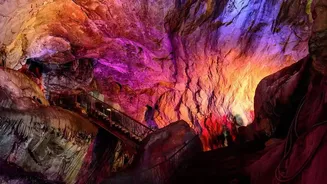








All Aboard the Cave Express
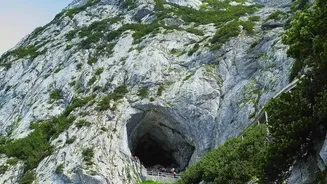
The adventure at Postojna Cave begins unlike any other, with a ride on the world's only double-track cave railway. First opened in 1872, this unique electric train whisks visitors deep into the Earth, covering nearly four kilometres of subterranean landscape.
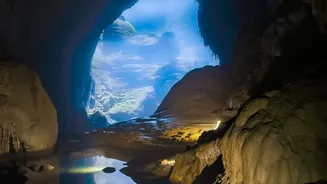
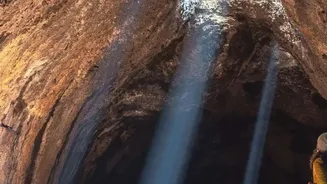
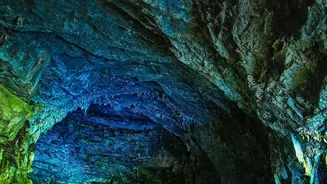
As you travel, caverns and galleries glide past, illuminated to reveal the sheer scale of this underground world carved by the Pivka River over millions of years. The train journey itself is a thrilling introduction, navigating through tunnels and opening into vast halls, setting the stage for the walking tour that follows. It's a system that has been welcoming tourists for over 200 years, making the cave one of the planet's most accessible and astounding natural wonders.
A Walk Through Nature's Art Gallery
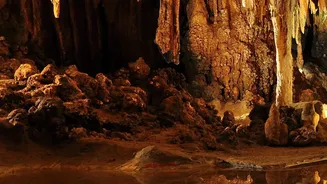
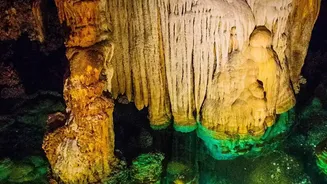
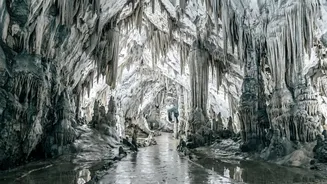
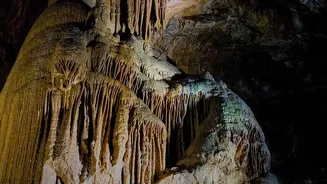
After the train ride, you'll embark on a guided walk of just over a kilometre through a wonderland of calcite formations. The paths wind through chambers filled with countless stalactites and stalagmites, some taking thousands of years to grow a few centimetres. Highlights include the Spaghetti Hall, with its delicate, thin formations resembling 'petrified rain', and the Red and White Halls, named for the minerals that colour them. The journey leads to the Great Mountain, a massive cavern filled with towering formations. Perhaps most famous is the 'Brilliant', a five-metre-tall, dazzling white stalagmite that has become a symbol of the cave. Its pristine appearance is due to a thin layer of flowstone deposited by slowly dripping water, making it glisten under the lights.
The Cathedral of Sound
One of Postojna's most awe-inspiring sections is the Concert Hall. This enormous chamber is renowned for its exceptional acoustics and has space for up to 10,000 people. Over the years, it has hosted performances by symphony orchestras and various other musicians, its natural architecture creating a unique venue. The grandeur is amplified by Murano glass chandeliers that hang from the ceiling, adding a touch of fairytale magic to the cavernous space. Even during a standard tour, standing in the hall gives you a sense of its immense scale and acoustic perfection, a testament to nature's ability to create spaces of both beauty and function.
Meet the Legendary 'Baby Dragons'
Postojna Cave is also a cradle of speleobiology, the study of cave life. Its most famous resident is the olm, or Proteus anguinus, a blind aquatic salamander that locals once believed were baby dragons washed out from a dragon's lair deep inside the cave. These remarkable creatures are the largest cave-dwelling animals in Europe and can live up to 100 years, sometimes going without food for several years. Near the end of the tour, visitors can see these pale, translucent amphibians in a special aquarium. In 2016, the world watched as olm eggs hatched in the cave, a rare and successful breeding event that produced a new generation of 'baby dragons'.