




The Great Indian Monsoon
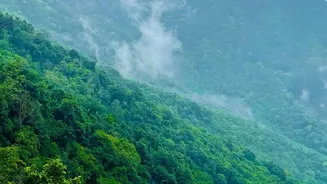
From June to September, the Indian subcontinent undergoes a dramatic transformation. The southwest monsoon winds, laden with moisture from the Indian Ocean, sweep across the country. They bring life-giving rains that drench the plains, forests, and coastlines,
turning the landscape a vibrant green. This annual weather phenomenon dictates everything from agriculture to travel plans for millions. Cities are washed clean, rivers swell, and the air grows thick with humidity. For most of the country, it's a season of indoor activities and navigating waterlogged streets, a stark contrast to the dry heat of summer.
The Himalayan Fortress
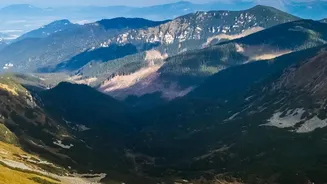
The key to Ladakh's unique climate lies in its formidable geography. The region is shielded by the immense Himalayan mountain range. As the moisture-heavy monsoon clouds travel north, they encounter this massive natural barrier. Forced to ascend, the air cools, and its capacity to hold water diminishes. This process, known as orographic lift, causes the clouds to release almost all their moisture as heavy rainfall on the southern, or windward, slopes of the Himalayas. By the time the air mass crosses the towering peaks to reach Ladakh on the other side, it is almost entirely devoid of moisture.
Life in the Rain Shadow
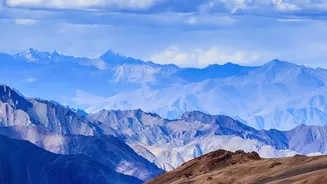
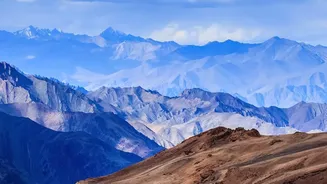
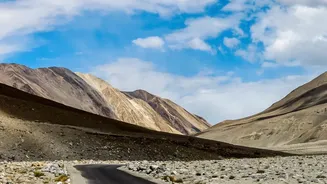
Ladakh sits in what is called a 'rain shadow' — a dry area on the leeward side of a mountain range. The Himalayas effectively block the monsoon, leaving Ladakh with an arid, cold desert climate. The region receives incredibly low annual precipitation, often less than 100mm, which is why the landscape is mostly barren, with sparse vegetation. The air is thin and dry due to the high altitude, which averages over 3,000 meters (9,800 feet). This combination of factors means that while the rest of India experiences a wet and humid monsoon, Ladakh enjoys a season of remarkably clear, sunny, and dry weather.
A Traveller's Sunny Escape
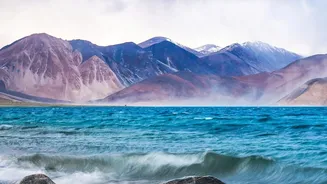
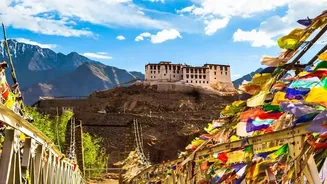
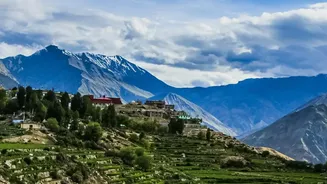
This unique climatic condition makes Ladakh a prime travel destination precisely when many other Himalayan regions are inaccessible due to rain and landslides. The months from July to September are considered one of the best times to visit. During this period, the high mountain passes are reliably open, roads are clear, and the weather is pleasant with warm days and cool nights. The minimal rainfall means trekkers, bikers, and sightseers can explore the stunning vistas of barren mountains, turquoise lakes like Pangong Tso, and ancient monasteries under brilliant blue skies. The valleys may even see a brief hint of green from the little moisture that does arrive, adding a touch of colour to the dramatic high-altitude desert.
Changing Weather Patterns
While Ladakh is historically defined by its arid climate, recent years have shown some changes. Some data suggests an increase in monsoon precipitation in the region, a departure from its long-standing pattern. In some recent years, Ladakh has recorded above-normal rainfall, leading to concerns about the fragile ecosystem's ability to handle increased moisture. These shifts can cause challenges like flash floods and landslides in a region not accustomed to significant rainfall. For now, however, Ladakh remains a stark and beautiful exception to India's monsoon rule, but these changing trends are a reminder of the delicate balance of its unique environment.