





The Problem with the Curated Page
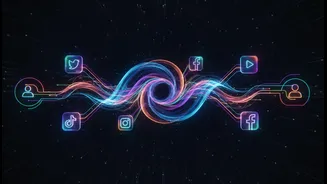
For years, the core of the social media experience has been the algorithmic feed. Platforms like Facebook, Instagram, and X use complex systems to decide what you see, prioritizing content designed to maximize your engagement. This model, built to hold
your attention and sell it to advertisers, has led to a host of well-documented problems: filter bubbles that limit exposure to different viewpoints, the amplification of emotionally charged or extreme content, and a general sense of unease as you miss posts from friends while being served viral videos from strangers. This opaque curation has created a growing desire for an escape hatch, a return to a simpler time. But the solution isn't as straightforward as just turning the algorithm off.
What 'Algorithm-Free' Really Means
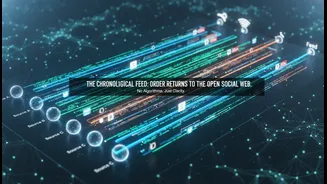
When people say they want an 'algorithm-free' feed, they often mean a simple, reverse-chronological timeline. While that's one option, the conversation on the emerging 'open social web' is far more creative. Platforms like Bluesky and Mastodon are built on the idea of user choice. The goal isn't the absence of algorithms but the control over them. On Bluesky, for example, users can subscribe to various custom feeds created by anyone, for any purpose—a feed for breaking news, another for art, and another that just shows posts from your friends. Mastodon, part of the 'fediverse', gives users a chronological home feed of people they follow, but the structure of its interconnected servers (or 'instances') also shapes content discovery. This approach shifts the power from a single corporation's engagement goals to the user's own interests and choices.
The Nostalgia Trap
The idea of a purely neutral, chronological feed is mostly nostalgia. In the early days, this model worked because the volume of content was manageable. Today, a strictly chronological feed for a user following hundreds or thousands of accounts would be an unusable firehose of information. Research and past experiments have shown that when faced with an unfiltered, chronological torrent, user engagement often drops. Such a system also has its own biases, rewarding those who post most frequently, not those who post the highest quality content. It can increase exposure to spam and abuse while making it harder for new creators to be discovered. The simple truth is that any method of sorting content, even by time, is a form of curation with its own set of winners and losers.
The Promise of an Open Social Web
The 'open social web' refers to a network of interconnected platforms built on open protocols, much like the web itself. Unlike the walled gardens of today's major platforms, these newer services are often decentralized, meaning they are not controlled by a single company. This structure offers what some call a 'credible exit': if a service becomes hostile to its users, they can theoretically take their data and followers to another compatible service. This philosophical shift underpins the move toward algorithm choice. By giving users the tools to build, select, and modify their own feeds, the open social web aims to create a healthier ecosystem where connection and discovery are driven by genuine interest, not by a company's need to maximize ad revenue.
The Future is Your Choice
Ultimately, an 'algorithm-free' future is not about having no algorithms; it's about having many. The most promising path forward involves platforms providing a simple, chronological feed as a default or an easily accessible option, while also empowering users with a marketplace of alternative sorting and discovery tools. This model allows you to have a quiet feed of your friends, a chaotic feed for a specific hobby, and a discovery feed tuned to your specific interests, all at the same time. This approach moves beyond the binary debate of chronological versus algorithmic. It recognizes that curation is necessary at scale but insists that the user, not the platform, should be the one in control.