




Understanding the Foundational Movement
At its heart, Cat-Cow is a dynamic flow between two opposite shapes: spinal flexion (Cat) and spinal extension (Cow). Flexion is the act of rounding your back, like a cat stretching, which lengthens the muscles along your spine. Extension is the gentle
arching of your back, dropping the belly and lifting the chest, which opens the front of the body. This rhythmic, breath-led movement helps to increase circulation, warm up the spine, and gently massage the abdominal organs. It is less about achieving a perfect shape and more about exploring how your own spine moves.
Setting Up Your Tabletop Position
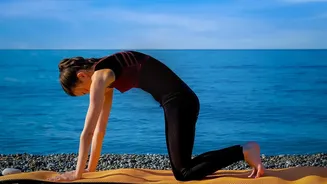
Proper alignment is key to a safe and effective practice. Start on all fours in what is called a 'tabletop' position. Your wrists should be directly under your shoulders, and your knees directly under your hips, about hip-width apart. Spread your fingers wide to distribute weight evenly across your hands, avoiding pressure on the wrist crease. Your spine should begin in a neutral, long line—not arched or rounded. Gaze softly at the floor between your hands to keep your neck aligned with the rest of your spine. If your knees are sensitive, place a folded blanket under them for extra cushioning.
Inhaling into Cow Pose (Bitilasana)
The movement should begin from your pelvis and ripple up your spine. On an inhale, start to tip your tailbone toward the ceiling. Allow your belly to soften and drop toward the floor as your back gently arches. Broaden across your collarbones and draw your shoulder blades toward each other to open your chest. Lift your gaze slightly forward, but avoid cranking your head back; the goal is to keep the neck long and relaxed. Think of creating length from your tailbone to the crown of your head first, then finding the gentle arch.
Exhaling into Cat Pose (Marjaryasana)
On an exhale, again initiate the movement from your pelvis, this time tucking your tailbone under. Press the floor away with your hands as you round your spine toward the ceiling. Feel your shoulder blades spread apart across your back. Allow your head to release downwards naturally, tucking your chin toward your chest without forcing it. The shape should feel like you are creating space between each vertebra as your back gently stretches.
Common Mistakes and How to Adjust
One of the most frequent errors is moving too quickly and not synchronizing the movement with your breath. Aim for a slow, full inhale for the entire Cow pose and a slow, full exhale for the entire Cat pose. Another common issue is leading with the head instead of the pelvis; let your spine guide the movement. Avoid collapsing into your shoulders by actively pressing the floor away. In Cow pose, be mindful not to over-arch the lower back or crunch the neck. If you feel any pinching, reduce the range of motion. The movement should always feel supportive and pain-free.
Modifications for Every Body
Cat-Cow is highly adaptable. If you have wrist pain, you can make fists with your hands or come down onto your forearms. For those with sensitive knees or who find it difficult to be on the floor, the entire sequence can be done while seated in a chair. Sit tall with your feet flat on the floor, hands on your knees, and perform the same spinal flexion and extension. This makes it an excellent stretch to do during a break at the office.