



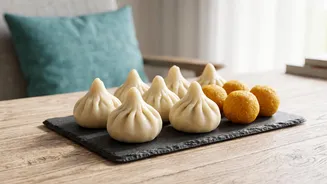

The Golden Rule: Cool Before You Store
Before you even think about storage, every type of modak must be allowed to cool down completely to room temperature. Storing them while still warm creates condensation inside the container, which is a perfect breeding ground for bacteria and can make
your modaks soggy and spoil much faster. Patience is the first step in preservation. Once cooled, place them in an airtight container to protect them from air and moisture, which are the primary enemies of freshness. For sweets containing milk products, using glass or stainless steel containers is often recommended over plastic.
Steamed Modaks (Ukadiche Modak)
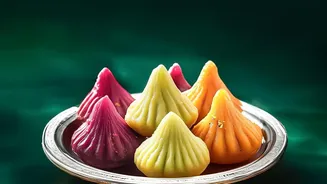
This is the most traditional and also the most perishable variety. Made with a moist rice flour shell and a fresh coconut-jaggery filling, steamed modaks have a very high moisture content, making them susceptible to spoilage. At room temperature, they are best consumed on the day they are made, ideally within 12 to 24 hours. If you have leftovers, they must be refrigerated. In an airtight container, steamed modaks can last for about two to three days in the fridge. Beyond this, they tend to become dry and hard. To serve refrigerated modaks, it's best to re-steam them for a few minutes until soft and warm. Microwaving can make the outer shell rubbery or chewy.
Fried Modaks (Talniche Modak)
Thanks to the deep-frying process, which removes significant moisture, fried modaks have a much longer shelf life than their steamed counterparts. The outer shell is typically made from wheat flour, creating a crisp barrier that protects the filling. These modaks can be safely stored in an airtight container at room temperature for three to five days. The low moisture content makes them less prone to spoilage. For longer storage, you can refrigerate them for up to a week. Like other fried snacks, they might lose some of their crispness in the fridge but will remain perfectly safe to eat. You can serve them at room temperature.
Mawa or Khoya Modaks
Modaks made with mawa (also known as khoya, or dried milk solids) are rich, dense, and delicious, but they are also highly perishable because they are milk-based. These sweets should be refrigerated as soon as they have cooled. At room temperature, they should be consumed within two to three days. When stored in an airtight container in the refrigerator, mawa modaks can last for up to a week. Before serving, it is best to let them sit at room temperature for about 15-20 minutes to soften slightly and allow their full flavour to emerge.
Dry Fruit and No-Cook Modaks
Modern variations like dry fruit modaks, made primarily from dates, figs, and nuts, have an excellent shelf life. Since they contain very little moisture, they can last for up to 10 days at room temperature when kept in an airtight jar. Similarly, other no-cook varieties, such as those made with roasted flours or crushed biscuits, also tend to last longer. Refrigeration can extend their life even further, but it is not strictly necessary for short-term storage, as long as they are protected from humidity.
When to Discard: The Telltale Signs
Knowing when to throw away a modak is just as important as knowing how to store it. Trust your senses. The first sign is often an 'off' or sour smell, particularly with steamed and mawa varieties. Any visible signs of mould—which can appear as green, white, or black fuzzy spots—mean the entire batch should be discarded. Do not just cut off the mouldy part, as the roots can penetrate deep into the soft sweet. Another clear indicator is a change in texture. If your modaks feel slimy, sticky, or unusually wet, they have likely spoiled and are unsafe to eat. A sour or unpleasant taste is a final confirmation, but you should never taste a food you suspect has gone bad. When in doubt, it is always safest to throw it out.