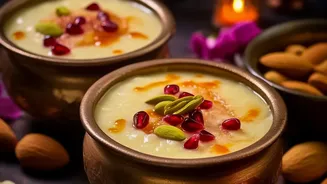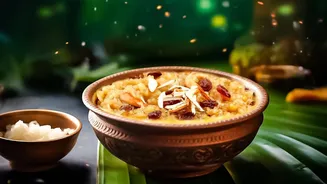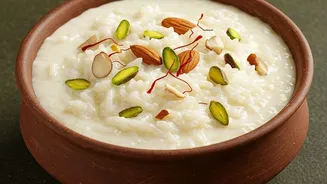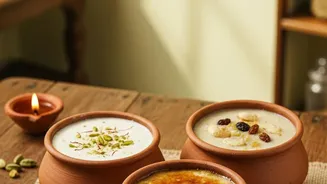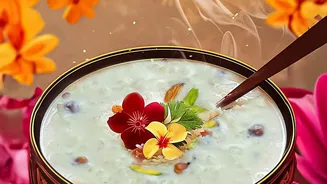

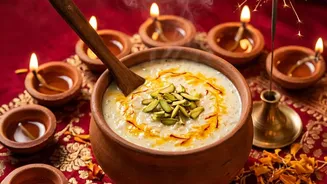
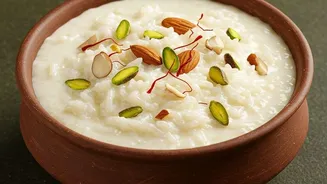
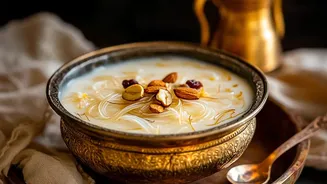
When you think of rice pudding, a creamy, milky sweetness likely comes to mind. But what if the star ingredient wasn't milk or sugar, but the pure, earthy essence of sugarcane? Enter sugarcane kheer, a rustic classic that transforms the familiar.
A Rustic Twist on a Classic
Known
in parts of North India as 'roh di kheer' or 'rasawal', sugarcane kheer is a traditional pudding that holds a special place in regional cuisine, particularly in Punjab. At its core, the recipe is brilliantly simple: rice is slow-cooked not in milk, but in fresh sugarcane juice. This fundamental swap is what sets it apart, creating a dessert that is deeply connected to the harvest season and offers a flavour profile entirely distinct from its dairy-based cousin. Instead of refined sugar, the natural sweetness of the sugarcane is concentrated through slow cooking, resulting in a rich, wholesome, and uniquely aromatic dish.
The Soul of the Dish: Sugarcane Juice
The magic of this kheer lies entirely in its primary ingredient: fresh sugarcane juice, or 'ganne ka ras'. Unlike the one-note sweetness of white sugar, sugarcane juice carries complex, earthy, and almost molasses-like undertones. When simmered for an extended period, these flavours deepen and caramelize naturally. The process requires patience; as the juice first comes to a boil, impurities are skimmed from the surface, often with the help of a splash of milk to aid clarification. This ensures a cleaner taste and a beautiful golden hue. The result is a sweetness that feels more profound and connected to its agricultural source, a true taste of the harvest.
A Winter Harvest Tradition
Sugarcane kheer is intrinsically linked to winter, especially around harvest festivals like Lohri and Makar Sankranti in Punjab and other parts of North India. During this time, sugarcane is freshly harvested, making its juice abundant and flavourful. Traditionally, the kheer was prepared over a slow, wood-fired stove or 'chulha', allowing it to simmer for hours and develop its signature velvety texture. One charming tradition, particularly in Punjab, involves the saying 'Poh ridhi, Magh khadi', which means the kheer is cooked on the last night of the month of Poh (Lohri) and eaten the next morning, often chilled and sometimes served with a dollop of curd for breakfast.
Flavour and Texture Unlike Any Other
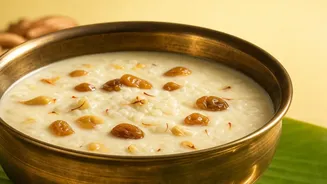
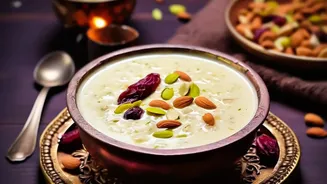
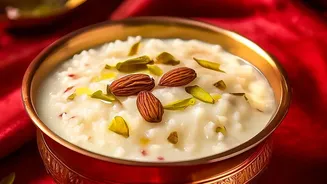
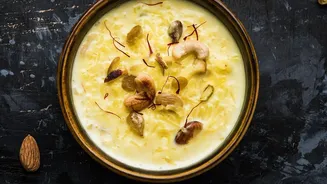
The experience of eating sugarcane kheer is a departure from standard rice pudding. The consistency is less creamy and more syrupy, as the rice grains swell and soften in the thickening juice. While some recipes incorporate a little milk towards the end for richness, the essential character remains light yet luscious. The flavour is intensely sweet but in a complex way, with the earthy notes of the sugarcane shining through. It is often perfumed with a touch of green cardamom, and garnished with toasted nuts like almonds and cashews, which add a delightful crunch and savoury balance to the profound sweetness. Some variations even call for a pinch of rock salt to heighten all the flavours.
Making It in the Modern Kitchen
While you may not have a traditional clay pot or wood-fired stove, making sugarcane kheer at home is entirely possible. The key is sourcing pure, fresh sugarcane juice without any additives like ginger or lemon. A heavy-bottomed pan is essential to prevent the juice from scorching as it reduces. The process is a slow one, requiring you to simmer the rice and juice on low heat, stirring occasionally, for an hour or more until the rice is perfectly cooked and the liquid has thickened to a syrupy consistency. It's a labour of love, but the unique and delicious result is a rewarding taste of a timeless culinary tradition.