


A New Space Age for India
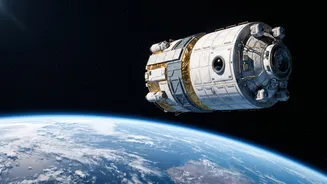
The success of missions like Chandrayaan has ignited a national passion for space, but it has also laid the foundation for a concrete, long-term strategy. The Indian government has outlined a bold vision that includes establishing the 'Bharatiya Antariksha
Station' by 2035 and achieving a crewed lunar landing by 2040. These are not just aspirational goals; they are drivers of a new industrial and scientific ecosystem. To support these ambitions, ISRO is planning a series of complex missions, including a lunar sample return mission (Chandrayaan-4) by 2028 and a collaborative exploration mission with Japan. This roadmap signals a clear shift from singular exploratory missions to building a sustained presence in space, a move that requires a vast and varied workforce.
More Than Just Astronauts and Rocket Scientists
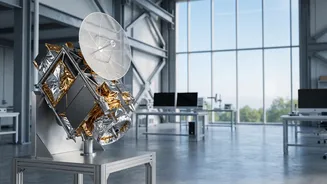
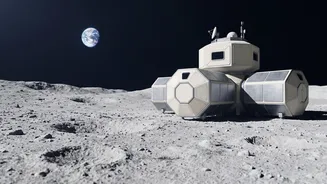
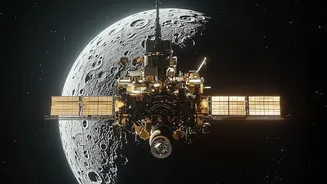
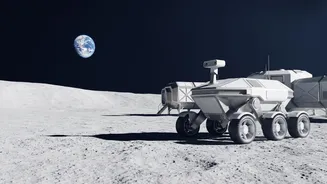
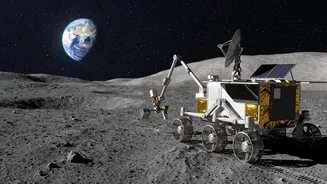
For decades, a career in space in India was largely synonymous with becoming a scientist or engineer at ISRO. That is rapidly changing. The goal of building a lunar outpost and a space station requires a far broader range of expertise. We will need space systems engineers to design and integrate spacecraft, and launch vehicle engineers to build the rockets that carry them. But beyond that, imagine the need for specialists in life support systems, creating environments where humans can survive in the harsh vacuum of space. Think of robotics engineers designing and operating rovers and construction bots that will prepare the lunar surface before humans arrive. These are the new frontiers of engineering.
The Groundswell of Private Innovation
Perhaps the most significant change is the government's decision to open the space sector to private enterprise. India is now home to over 400 space startups, creating a vibrant ecosystem of innovation and employment. Companies like Skyroot Aerospace and Agnikul Cosmos are developing their own launch vehicles, while others like Pixxel and Dhruva Space are building satellite constellations. This privatisation is creating a massive demand for aerospace software engineers, who build the 'brains' of a mission, and satellite data analysts, who turn raw imagery into actionable intelligence for agriculture, climate monitoring, and urban planning. This boom means salaries are becoming more competitive, with roles in private firms offering pay comparable to the tech industry, along with the excitement of working in a pioneering field.
Building Habitats and Managing Resources
A permanent base on the Moon is one of the most complex engineering challenges ever undertaken. It will require new specialisations that are only just beginning to emerge. Material scientists will be needed to develop and test composites that can withstand extreme temperatures and radiation. Some are even working on creating 'space bricks' from lunar soil to build structures. Geologists and resource utilisation experts will be critical in identifying and extracting resources like water ice, which can be converted into breathable air and rocket fuel. Furthermore, as these activities become more common, a new field of space law and policy is growing to manage everything from launch agreements to international regulations.
Preparing for the Careers of Tomorrow
The prospect of a lunar base is transforming space from a distant dream into a tangible career path for a new generation. The convergence of government ambition and private capital means that opportunities are no longer limited to a few specialists who clear ISRO's competitive exams. Students and professionals in fields like software development, data science, robotics, materials science, and even law now have a clear path into the space sector. This is not a distant future; the groundwork for the Bharatiya Antariksha Station is already being laid, with the first module planned for a 2028 launch. The skills being developed for this near-Earth station will be the same ones needed for the even more ambitious lunar missions to follow.