




A Glimpse into the Cosmic Dawn
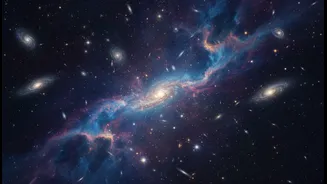
To understand our cosmic origins, astronomers use powerful tools like the Hubble Space Telescope to peer deep into space, which is the same as looking back in time. The light from the most distant galaxies has travelled for over 13 billion years to reach
us, offering a precious snapshot of the universe in its infancy. For a long time, the prevailing theory was that the first galaxies formed slowly and gradually. The model was one of orderly, measured growth, with stars forming over vast stretches of time as gas clouds gently collapsed under gravity. It was a neat and tidy picture, but it turns out the reality was far more chaotic and energetic.
A Universe in a Hurry
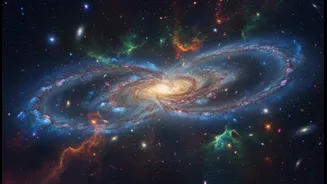
New observations have turned this old idea on its head. Astronomers have found that many galaxies in the early universe were anything but slow and steady. Instead, they were compact, brilliant, and furiously birthing new stars. These so-called 'starburst' galaxies were forming stars at a pace that is hard to comprehend—in some cases, ten times faster than our own Milky Way does today. For example, recent analysis of a tiny galaxy named MXDFz4.4, seen as it was just 1.4 billion years after the Big Bang, revealed it is about 100 times smaller than the Milky Way but is forming stars 10 times faster. This isn't a minor adjustment to the theory; it's a fundamental rewrite of how we thought the first stellar nurseries operated.
Why the Frantic Pace?
So, what caused this frantic pace of star formation? The answer seems to lie in the unique conditions of the young cosmos. First, the universe was much denser. Galaxies were closer together, and the raw material for stars—vast clouds of hydrogen gas—was more readily available. Frequent interactions and mergers between galaxies could have triggered these intense bursts of star formation. Furthermore, these early galaxies were incredibly compact. Packing a huge number of young, massive stars into a very small space creates an environment of intense radiation. This concentration of energy appears to be key. Instead of a slow burn, these early galaxies experienced explosive periods of creation, rapidly converting their gas reserves into new stars.
Clearing the Cosmic Fog
This rapid star formation had a profound effect on the entire universe. For the first billion years or so after the Big Bang, the cosmos was filled with a thick, opaque fog of neutral hydrogen gas that blocked energetic light. The intense ultraviolet radiation blasting out from these compact, starburst galaxies was powerful enough to ionise this gas, effectively burning off the fog and making the universe transparent. The discovery of a galaxy like MXDFz4.4 provides the first direct evidence of this process, known as the Epoch of Reionisation, in action. Astronomers had long theorised that early star-forming galaxies were responsible for this transformation, and now Hubble has seen one caught in the act.
A New Chapter in Cosmic History
This discovery, made possible by combining data from Hubble with other powerful observatories like the James Webb Space Telescope, forces us to re-examine what we thought we knew about how the first galaxies evolved. It shows that the early universe was a far more dynamic and turbulent place than previously imagined. These small, hyperactive galaxies weren't just side-notes in cosmic history; they were the primary engines of change, shaping the environment and paving the way for the larger, more orderly galaxies like our own that would come later. The finding that these galaxies could form stars so efficiently, so early on, helps solve the mystery of how the universe became the transparent, star-filled cosmos we see today.