







The Saver's Dilemma: Growth vs. Access
Fixed Deposits (FDs) are a cornerstone of financial planning for millions of Indians, prized for their safety and predictable returns. Banks typically offer higher interest rates for longer lock-in periods, or tenures. A five-year FD will almost always
earn you more interest than a one-year FD. The catch, however, is liquidity. If a sudden expense arises—a medical emergency, an unexpected repair, or a business opportunity—breaking that long-term FD before its maturity date usually incurs a penalty, typically 0.5% to 1% of the interest rate. This forces a difficult choice: chase higher returns and risk having your funds tied up, or settle for the low interest of a savings account to ensure you can access your cash anytime. This trade-off between growth and liquidity is a constant challenge for prudent savers.
What Exactly is FD Laddering?
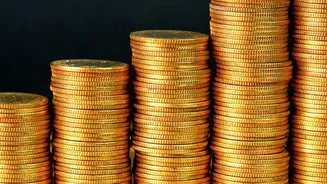
FD laddering is a simple yet powerful strategy that solves this problem. Instead of investing a lump sum into a single FD, you divide the money into multiple FDs with different maturity dates. Imagine you have a ladder, where each rung represents a separate FD. Each rung is set to mature at a different time—one this year, another the next, and so on. This technique of staggering your investments ensures that a portion of your money becomes available at regular intervals, giving you a predictable stream of cash flow without disturbing your entire savings pool. It’s a disciplined approach that turns a static investment into a dynamic and flexible financial tool.
How to Build Your Own FD Ladder: A Simple Example
Building an FD ladder is more straightforward than it sounds. Let's say you have ₹5 lakh to invest. Instead of putting the entire amount into a single five-year FD, you can build a five-rung ladder: FD 1: ₹1 lakh for a 1-year tenure FD 2: ₹1 lakh for a 2-year tenure FD 3: ₹1 lakh for a 3-year tenure FD 4: ₹1 lakh for a 4-year tenure * FD 5: ₹1 lakh for a 5-year tenure At the end of the first year, your ₹1 lakh FD matures. Now you have a choice: you can use the cash for any need, or you can reinvest it. The strategy's magic lies in reinvesting that matured amount into a new five-year FD. After year two, the second FD matures, and you do the same. By the fifth year, you will have a ladder where all your deposits are in high-earning five-year tenures, but one is conveniently maturing every single year.
The Twin Benefits: Liquidity and Better Returns
The primary advantage of laddering is that it directly addresses the two promises in its name. First, it provides enhanced liquidity. With an FD maturing every year, you have planned access to funds. This can be perfect for predictable, recurring expenses like paying for a child's education, an annual insurance premium, or simply having an emergency fund you can tap into without penalty. Second, it helps optimise your interest earnings. The strategy allows you to benefit from the higher interest rates typically offered on longer-term FDs. Furthermore, it mitigates interest rate risk. If you lock all your money into one FD and interest rates rise, you miss out. With a ladder, as each FD matures annually, you can reinvest it at the new, potentially higher prevailing rate. Conversely, if rates fall, only a portion of your money is reinvested at the lower rate, while the rest of your FDs continue to earn at the higher locked-in rates.
Is FD Laddering Right for You?
This strategy is particularly beneficial for certain types of savers. Retirees find it useful for creating a steady, predictable income stream. Individuals saving for multiple, staggered goals—like a down payment in two years and a wedding in four—can align their FD maturities with their financial timeline. It’s also an excellent strategy for building a more robust emergency fund that works harder for you than money sitting in a savings account. However, it does require a bit more management than a single FD. You need to keep track of multiple maturity dates and make decisions about reinvesting. It's also worth noting that in a consistently falling interest rate environment, you would be reinvesting maturing FDs at progressively lower rates, which could impact overall returns.