





The Cosmic Debris of Halley's Comet
The Orionid meteor shower is an annual celestial event that occurs when our planet intersects with the debris stream of one of history's most famous comets, 1P/Halley. These meteors are essentially tiny fragments, many no larger than a grain of sand,
that were shed by the comet on its 76-year journey around the sun. As these particles slam into Earth's upper atmosphere at tremendous speeds—around 66 kilometres per second—they burn up, creating the fleeting, fiery streaks we call 'shooting stars'. The shower gets its name because the meteors appear to radiate from a point within the constellation of Orion, but they can be spotted across the entire night sky. Known for their brightness and speed, some Orionids can even leave behind glowing trails of ionised gas that linger for a few moments after the meteor itself has vanished.
Viewing Forecast for India in 2026
In 2026, the Orionid meteor shower will peak on the night of October 21-22. Under ideal, dark-sky conditions, viewers might see between 10 and 20 meteors per hour. However, this year presents a significant challenge: the peak night coincides with a bright, waxing gibbous Moon that will be about 80% illuminated. This natural light pollution will wash out many of the fainter meteors for most of the night. The good news for dedicated observers in India is that the Moon will set around 3 a.m. local time. This opens a narrow window of prime viewing in the dark hours between moonset and the first light of dawn, when the radiant is high in the sky. Your best chance to spot the Orionids will be during this pre-dawn period.
The Glow That Hides the Stars
For the millions living in India’s major metropolitan areas, the Moon is only part of the problem. The bigger, more persistent issue is artificial light pollution. This phenomenon, often called 'skyglow', is the bright dome of light visible over cities at night. It is caused by the collective glow of streetlights, advertising billboards, commercial buildings, and homes, which scatter off particles in the atmosphere and create a luminous haze that obscures all but the brightest celestial objects. Major Indian metros like Mumbai, Delhi NCR, Bengaluru, and Kolkata suffer from extreme levels of light pollution, often classified as Bortle Class 8 or 9. In such environments, the number of visible stars can drop from thousands to fewer than a hundred, and faint events like meteor showers become nearly impossible to see.
A Reality Check for Metro Stargazers
If you plan to watch from a terrace or park within a major city like Mumbai or Delhi, expectations need to be managed. The intense skyglow will likely hide all but the most brilliant Orionid fireballs. Studies have shown that light pollution is rapidly increasing across states like Maharashtra, Karnataka, and around Delhi NCR, making stargazing a significant challenge. Driving just 30 to 40 minutes away from the dense urban core can dramatically increase the number of meteors you'll see. For residents of Bengaluru, this might mean heading towards the city's outskirts, away from the tech corridors. For those in Mumbai, it could involve a trip towards less developed coastal areas or inland regions. The goal is to put as much distance as possible between you and the city's light dome.
Your Guide to Beating the Glare
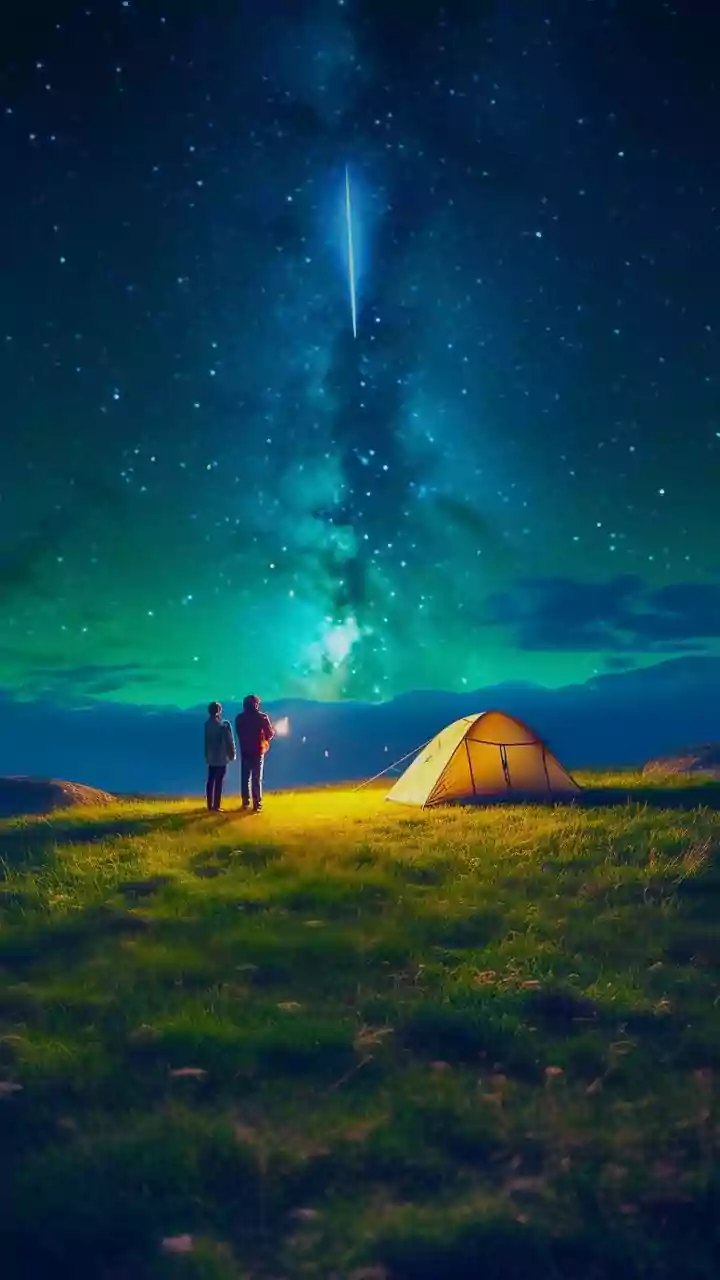
Despite the challenges, you can still improve your chances of catching a glimpse of the Orionids. First, aim for the pre-dawn hours of October 22, after the Moon has set. Second, get away from city lights. Find a location with an open view of the sky, far from direct streetlights. Parks, open grounds, or the outskirts of your city are your best bet. Third, be patient. It takes about 20-30 minutes for your eyes to fully adapt to the darkness, allowing you to see fainter objects. Avoid looking at your phone screen, as its bright light will ruin your night vision. Lie back on a blanket or reclining chair to get a wide, comfortable view of the sky. You don’t need a telescope or binoculars, as they restrict your field of view. Just use your eyes and scan the sky broadly; the meteors can appear anywhere.