



A New Generation of Seeing
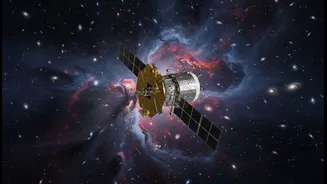
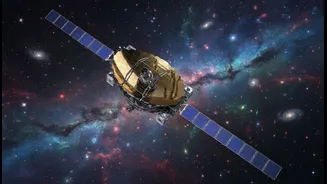
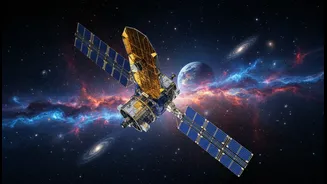
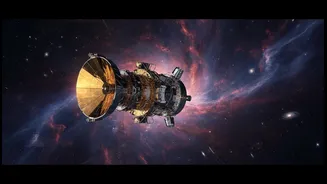
Named after Nancy Grace Roman, NASA's first chief of astronomy, the Roman Space Telescope is a flagship mission designed to tackle some of the biggest questions in cosmology, including the nature of dark energy and the census of exoplanets. While the James
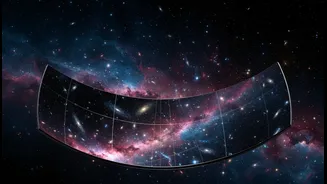
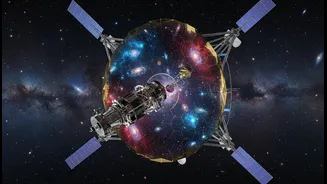
Webb Space Telescope (JWST) is designed for deep, narrow dives into cosmic mysteries, Roman is a wide-angle surveyor. Its Wide Field Instrument will capture images with the same resolution as Hubble but across a field of view 200 times larger. This means that in a single snapshot, Roman will map vast stretches of the sky, creating panoramic views of the universe that would take Hubble centuries to complete.
Hunting Worlds with Gravity's Lens
One of Roman's most powerful planet-hunting techniques is gravitational microlensing. This method, predicted by Einstein's theory of relativity, occurs when a star and its planets pass in front of a more distant, background star. The gravity of the foreground system acts like a lens, briefly magnifying the light from the background star. If the lensing star has a planet, the planet's own gravity creates a distinct, secondary spike in the light. This technique is incredibly sensitive, capable of finding planets thousands of light-years away, far beyond the reach of many other methods. Roman's continuous monitoring of hundreds of millions of stars toward the dense center of our galaxy is expected to uncover thousands of exoplanets this way, including worlds with masses as low as Mars and even 'rogue' planets that wander through space without a host star.
A Groundbreaking Look at Direct Imaging
Finding exoplanets is one challenge; directly seeing them is another. Stars are billions of times brighter than the planets that orbit them, making direct imaging incredibly difficult. Roman will tackle this with its Coronagraph Instrument, a technology demonstration that will be the most powerful of its kind ever flown in space. The coronagraph works by using a sophisticated system of masks and deformable mirrors to block the overwhelming glare of a host star, revealing the faint, reflected light of the planets orbiting it. This instrument is designed to detect planets up to 100 million times fainter than their star, a performance 100 to 1,000 times better than previous space-based coronagraphs. While it's a tech demo, it will be capable of imaging Jupiter-sized planets and paving the way for future missions, like the Habitable Worlds Observatory, which will aim to directly image Earth-like worlds.
A Powerful Partner to Webb
Roman is not a replacement for the James Webb Space Telescope, but a powerful complement. Think of Roman as the scout and Webb as the sniper. Roman's vast surveys will identify tens of thousands of fascinating targets, from unique exoplanets to distant galaxies. Webb, with its deep infrared sensitivity and powerful spectrographs, can then perform detailed follow-up studies on the most promising discoveries Roman makes. For example, Roman might discover a statistical treasure trove of planets through microlensing, while Webb can study the atmospheres of specific, closer transiting planets. Together, these two great observatories will provide a more complete picture of the universe, from its grand structure and evolution to the diversity of planetary systems within it.