



The Rules of the Quantum World
Quantum theory is famously counterintuitive. Unlike the predictable world of classical physics, where a ball's path can be perfectly calculated, the quantum realm operates on probabilities and uncertainties. Since its development in the 1920s, the theory has
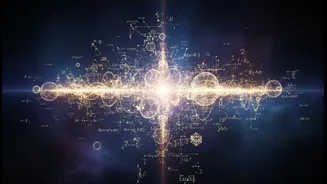
been formulated using a specific set of mathematical postulates or axioms. These rules involve concepts like Hilbert spaces, wave functions, and Hermitian operators—highly abstract tools that, while incredibly effective, don't offer much physical intuition about why the universe behaves this way. A key rule, for instance, is the Born rule, which tells physicists how to calculate the probability of a measurement's outcome. But the axioms themselves don't explain why this rule works; it's simply taken as a given because it matches experimental results.
From Axioms to Physical Principles
A growing movement in physics has sought to rebuild quantum mechanics from a more intuitive foundation. The goal is to derive the complex mathematical framework not from abstract axioms, but from a handful of simple, physical principles—much like how Einstein derived special relativity from the principles of relativity and the constancy of the speed of light. This approach, often called quantum reconstruction, asks a fundamental question: what are the simplest physical or information-based assumptions we can make that would force the universe to obey the laws of quantum mechanics? Over the last decade, researchers have made significant progress, showing that the theory can indeed be derived from principles related to information.
Information at the Heart of It All
A key breakthrough came from realizing that many quantum phenomena could be understood through the lens of information theory—the same science that underpins our digital world. Principles like 'no-superluminal-signaling' (information can't travel faster than light) and the 'no-cloning theorem' (you can't perfectly copy an unknown quantum state) provide powerful constraints. Researchers like Lluís Masanes, Markus P. Müller, and Thomas Galley have shown that if you start with a few basic principles about how information can be prepared, transformed, and measured, you can derive the core mathematical structure of quantum theory. In one significant paper, they even demonstrated that the Born rule and other measurement postulates can be deduced from the other parts of quantum theory, suggesting they are not as fundamental as once thought. This new perspective reframes quantum mechanics not just as a theory of particles and waves, but as a theory of information.
A Fresh Look at Old Ideas
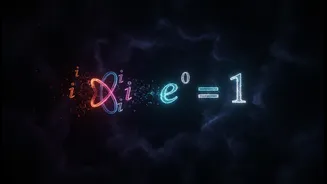
This foundational rethink is leading to other surprising discoveries. Recently, physicists have successfully formulated a version of quantum mechanics that works without using complex numbers—numbers with an "imaginary" component that were previously thought to be essential. While earlier work suggested this was impossible, new approaches have found a way around the roadblocks by rethinking how different quantum systems are combined mathematically. Similarly, other researchers have found ways to describe quantum phenomena like tunneling and entanglement using mathematical tools borrowed from classical physics. These developments don't invalidate the century of work that came before. Instead, they provide a deeper, more unified understanding of the physical world.
Why This Deeper Dive Matters
Rebuilding quantum theory from the ground up may seem like an academic exercise, but it has profound implications. By understanding the essential principles that make quantum mechanics unique, physicists can better see how it might connect with other theories, like general relativity, to form a unified "theory of everything." It also helps clarify the boundary between the quantum and classical worlds and opens up new ways to think about modifying the theory to search for new physics beyond our current understanding. This foundational work, by stripping the theory down to its essential physical ingredients, provides a clearer map for exploring the deepest mysteries of our universe.