



Why Hills Can Hurt
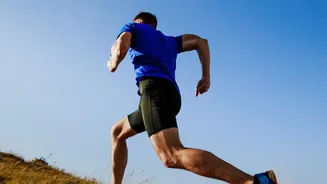
Hill running is a fantastic way to boost your cardiovascular fitness and build powerful leg muscles. However, the descent is where the trouble often begins. Running downhill dramatically increases the force your body has to absorb with each footstrike.
Your patellar tendon, which connects your kneecap to your shinbone, works overtime to control your speed and stabilize your knee. This repetitive, high-stress loading can lead to micro-injuries and pain, a condition commonly known as runner's knee or patellofemoral pain syndrome. The pain is often a dull ache felt behind or around the kneecap and can be aggravated not just by running, but by squatting or even walking down stairs.
Understanding the 'Braking' Motion
To protect your knees, you need to strengthen your tendons for this specific 'braking' demand. This is where eccentric loading comes in. Most strength training focuses on the concentric phase of muscle movement—the part where the muscle shortens, like when you push up from a squat. An eccentric contraction is the opposite: it's when the muscle lengthens under tension. Think about the slow, controlled motion of lowering your body into a squat. During a downhill run, your quadriceps are performing an eccentric action with every step, lengthening to absorb impact and control your descent. Training this specific movement is the key to building resilient tendons.
How Eccentric Loading Builds Stronger Tendons
Eccentric exercises are considered one of the most effective ways to treat and prevent tendon issues. This type of controlled loading stimulates cells within the tendon to produce more collagen, the protein that gives tendons their strong, fibrous structure. Over time, this process helps to remodel the tendon, making it thicker, stronger, and better equipped to handle the high-tensile forces of running. Instead of just resting the knee, this proactive approach builds its capacity, allowing it to tolerate a greater workload without becoming painful or injured. Strengthening the quadriceps, hips, and glutes through eccentric work provides better overall stability and control, reducing harmful stress on the knee joint.
Key Exercises for Knee Protection
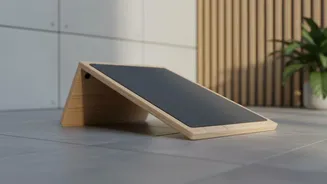
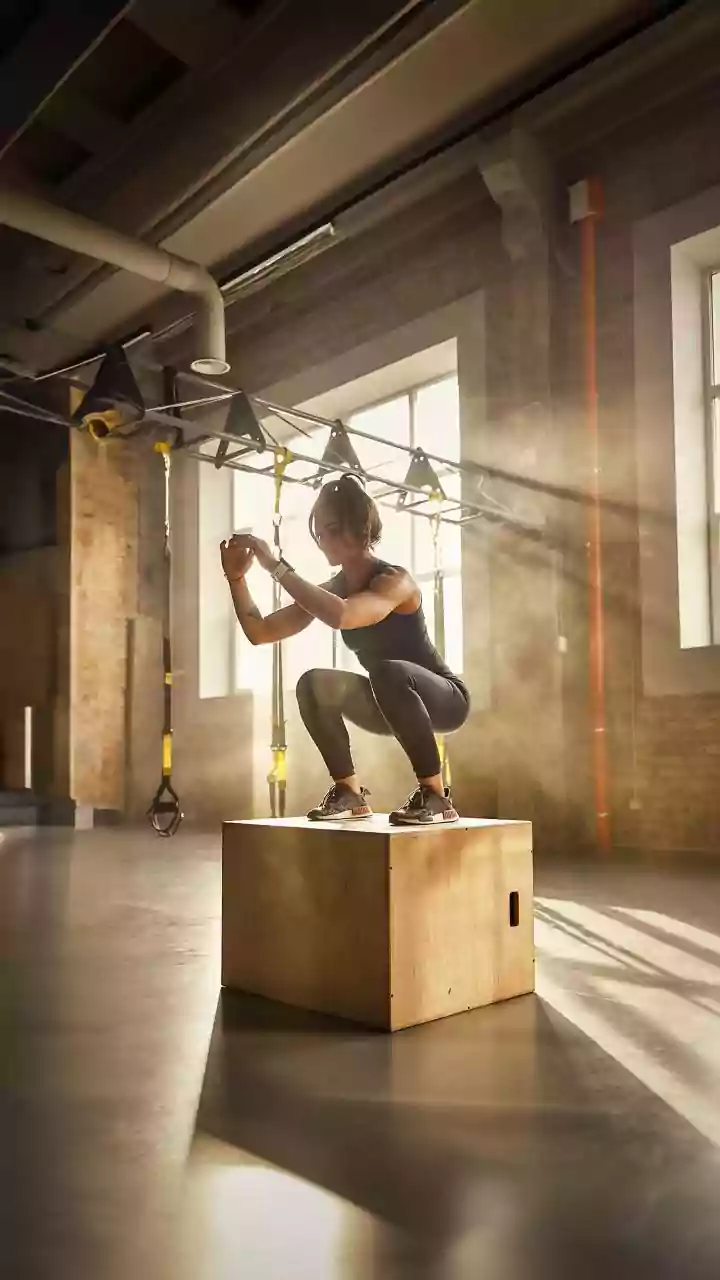
Incorporating a few key exercises into your routine can make a significant difference. Focus on slow, deliberate movements. Eccentric Step-Downs: Stand on the edge of a step or a low box. Balancing on one leg, slowly lower the heel of your other leg toward the floor. Take a full three to five seconds for this lowering phase. Lightly tap your heel, then use your standing leg to push back up to the starting position. Avoid putting weight on the foot that taps the ground. Slow Squats on a Decline: Performing squats on a 25-degree decline board or a small slope specifically targets the patellar tendon. Stand on the board and slowly lower yourself into a squat, focusing on a controlled descent. If you are already experiencing pain, you can use your uninjured leg or your arms to help push you back up, focusing only on the eccentric (lowering) phase on the affected leg. Single-Leg Squats (Pistol Squats): This is a more advanced exercise. Balancing on one leg, extend the other straight out in front of you. Lower your hips down and back as if sitting in a chair, going as low as you can while maintaining control. Push back up through your heel to the starting position. You can hold onto a wall or chair for balance as you build strength.
Integrating Eccentrics Into Your Training
You don't need to spend hours in the gym to see benefits. Aim to perform these exercises two to three times per week, either after a run or on a dedicated strength training day. Start with three sets of 10 to 15 repetitions for each exercise. The most important factor is the quality of the movement. Focus on the slow, controlled lowering phase of each repetition. It's normal to feel some muscle soreness when you first begin. However, if you feel sharp pain, stop the exercise. By consistently incorporating eccentric loading, you're not just preventing injury; you are actively building a more robust and capable body, ready to take on any hill with confidence.