








The Monsoon Challenge
High humidity during the rainy season creates the perfect breeding ground for mould, mildew, and bacteria. This can lead to musty smells, potential health issues like allergies, and damage to your home's surfaces. Conventional chemical cleaners can introduce
other pollutants into your home, especially when windows are closed. Low-toxic cleaning offers a safer alternative, using simple, effective ingredients to combat these monsoon-specific problems.
Your Low-Toxic Toolkit
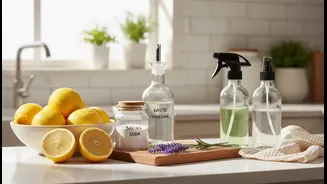
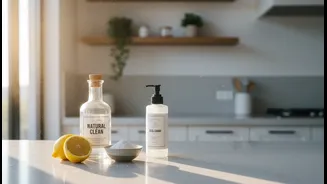
You don't need a cabinet full of chemicals. A few key ingredients form the foundation of most non-toxic cleaning recipes. White Vinegar: Its acidic nature makes it a great disinfectant and grease-cutter, effective against mould. However, its acidity can damage certain materials. Baking Soda: A gentle abrasive and a powerful deodorizer. It can be made into a paste to scrub away grime without scratching most surfaces. Lemon Juice: A natural disinfectant and bleaching agent with a fresh scent, but like vinegar, it's acidic. Essential Oils: Tea tree, neem, clove, and eucalyptus oils have potent antifungal and antibacterial properties, perfect for fighting monsoon mould and odours.
For Marble and Stone Floors
The golden rule for marble, granite, and other natural stone is to avoid acid. Cleaners like vinegar and lemon juice will etch and dull the surface, causing permanent damage. Instead, opt for the simplest solution: a few drops of mild, pH-neutral dish soap in a bucket of warm water. Use a soft microfiber mop that is damp, not soaking wet, to clean the floor. Afterwards, it's crucial to dry the surface with a clean cloth to prevent water spots and restore its shine. For cleaning grout between tiles, you can use a paste of baking soda and water, applied carefully with a soft brush to avoid scratching the marble.
For Wooden Furniture and Doors
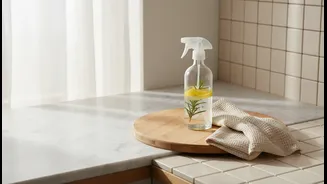
Wood's greatest enemy during the monsoon is moisture, which can cause swelling, warping, and mould. Avoid soaking wooden surfaces. For regular cleaning, a dusting spray made from one cup of water, a quarter cup of vinegar, two tablespoons of olive oil, and a few drops of lemon essential oil works well. The olive oil helps moisturize the wood, while the vinegar cleans. Always wipe the surface dry with a clean cloth immediately after cleaning. To combat musty smells in wooden wardrobes, place bowls of rock salt, coffee grounds, or charcoal to absorb moisture and odours. Adding a few drops of clove or neem oil to your cleaning solution can help deter mould growth.
For Ceramic and Porcelain Tiles
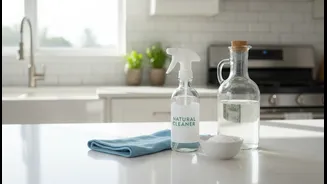
Tiles in bathrooms and kitchens are magnets for mould and mildew, especially in the grout lines. Unlike stone, these surfaces are generally resilient and can handle acidic cleaners. A spray made of equal parts white vinegar and water is highly effective for disinfecting and cutting through soap scum. For stubborn mould in grout, create a thick paste of baking soda and water. Apply it to the grout, let it sit, then spritz with your vinegar solution. The fizzing reaction helps lift the grime before you scrub with a brush. Adding tea tree oil to your spray will provide extra antifungal power.
For Glass Windows and Mirrors
The constant rain can leave windows grimy and streaked. A simple and effective low-toxic glass cleaner can be made by mixing one-quarter cup of white vinegar with two cups of water in a spray bottle. For a fresh scent, you can add about 10-12 drops of lemon essential oil. Spray the solution directly onto the glass and wipe with a clean microfiber cloth for a streak-free shine. Avoid cleaning windows in direct sunlight, as the solution can dry too quickly and leave streaks.