


The Red Planet's Persistent Threat
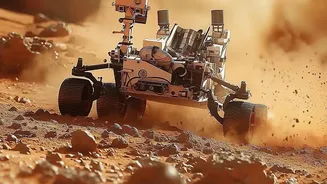
Mars is a dusty planet. Its rust-colored powder is finer than flour and, thanks to electrostatic charge, it clings to everything it touches. For the multi-billion dollar robotic explorers that rely on solar power, this dust is a persistent, life-threatening
problem. As it accumulates on solar arrays, it blocks sunlight and slowly suffocates the machine, reducing the power available for science, movement, and communication. A thin layer can significantly diminish energy production, and a major storm can be fatal. This isn't just a minor inconvenience; it's a primary factor determining the lifespan of some of humanity’s most ambitious and expensive off-world assets.
A Weather Forecast for Another World
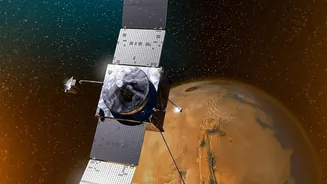
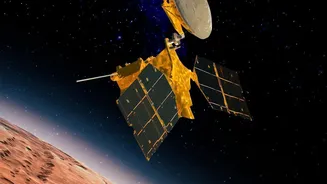
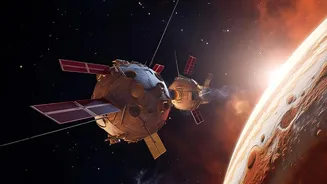
This is where the eyes in the sky become critical. Orbiting high above the surface, spacecraft like NASA's Mars Reconnaissance Orbiter (MRO) act as an interplanetary weather service. The MRO is equipped with a suite of powerful instruments, but one of the most important for surface operations is the Mars Color Imager, or MARCI. Each day, MARCI captures a global map of the planet, allowing scientists on Earth to spot developing dust storms, track their movement, and predict their path. These daily briefings are crucial for rover teams, giving them advanced warning of impending danger and allowing them to take protective measures long before the sky darkens over their location.
Lessons Learned from Fallen Robots
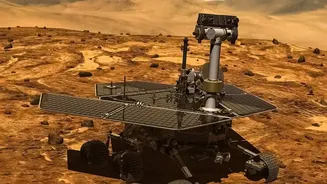
The stakes are incredibly high, a lesson learned the hard way. The tales of NASA’s solar-powered rovers are stories of both incredible resilience and tragic endings. The Spirit rover, designed for a 90-day mission, lasted for six years before succumbing to the Martian winter after getting stuck. Its twin, Opportunity, was an even greater legend, operating for over 14 years. Its mission famously ended in 2018 when a planet-encircling dust storm blotted out the sun, preventing its solar panels from recharging its batteries. More recently, the InSight lander, which detected hundreds of marsquakes, saw its power levels plummet as dust coated its panels, officially ending its mission in late 2022. These missions provided invaluable data, but their demise underscored the absolute necessity of forecasting these storms.
Survival Mode on the Surface
When a storm warning comes from an orbiter, the rover team on Earth springs into action. The primary strategy is energy conservation. All non-essential science activities are suspended, and the rover is put into a low-power hibernation state to ride out the storm. The goal is to use as little energy as possible, keeping only critical heaters and communication systems online to protect the hardware and await further instructions. Engineers might also try to point the solar panels in a direction where the wind might be strongest, hoping for a natural 'cleaning event' where gusts blow some of the accumulated dust away. While these events are helpful, they are unpredictable, making proactive energy saving the most reliable tactic.
The Future of Martian Power
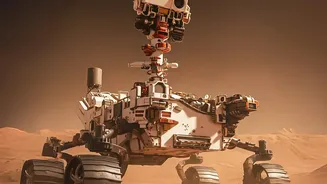
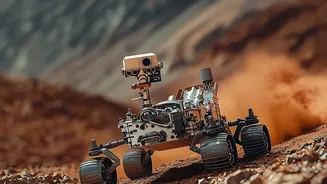
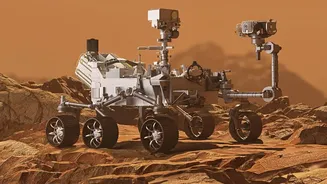
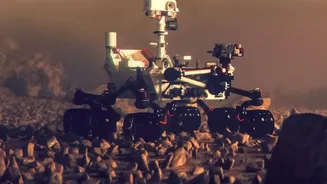
Not all Martian robots face this threat. NASA’s newer rovers, Curiosity and Perseverance, are nuclear-powered. They use the heat from decaying plutonium to generate electricity, making them immune to the effects of dust storms. However, solar power remains a vital and cost-effective option for many types of missions, especially stationary landers and smaller, specialized rovers. The ongoing orbital surveillance demonstrates a crucial synergy in space exploration: assets in the sky protecting assets on the ground. This interplanetary teamwork ensures that solar-powered missions can last longer and gather more data, maximizing the scientific return on these incredible journeys to another world.