








The Unseen Task of Your AC
Every air conditioner, by its very nature, removes humidity from the air. It's a fundamental part of the cooling process. As your AC pulls warm indoor air across its cold evaporator coils, moisture in the air condenses onto the coils, much like how water
droplets form on a cold glass on a hot day. This collected water then drips into a pan and is channeled out of your home through a drain line. The result is air that is not only cooler but also drier. An ideal indoor humidity level is generally between 30% and 50%. Too much humidity can make a room feel warmer than the thermostat reading suggests because the moisture in the air slows the evaporation of sweat from your skin. It can also contribute to problems like mold growth and damage to wooden furniture.
Discover the 'Dry Mode' Setting
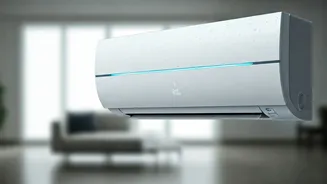
Many modern air conditioners, including central systems and mini-splits, come with a dedicated 'Dry Mode', often indicated by a water droplet symbol on the remote. This feature is specifically designed to prioritize moisture removal over aggressive cooling. In Dry Mode, the AC's compressor and fan run at a lower speed. This slower operation allows air to spend more time passing over the cold coils, which maximizes condensation and removes more humidity without drastically dropping the room's temperature. This mode is particularly useful on mild but humid days—think rainy afternoons or muggy mornings—when you don't need intense cooling but want to get rid of that sticky feeling. Using Dry Mode in these conditions can also be more energy-efficient than the standard 'Cool' setting because the compressor isn't running continuously at full power.
The 'Auto' vs 'On' Fan Debate
One of the simplest yet most effective adjustments you can make is at your thermostat. Most thermostats have a fan setting with two primary options: 'Auto' and 'On'. For humidity control, 'Auto' is almost always the superior choice. When set to 'Auto', the fan only runs when the air conditioner is actively cooling. This allows the moisture that has condensed on the coils to drain away properly between cooling cycles. Conversely, if the fan is set to 'On', it runs continuously. This constant airflow can blow the moisture right back into your house before it has a chance to drain, effectively re-humidifying your home and defeating the AC's hard work.
Advanced Humidity Management
For those seeking the highest level of comfort, advanced technology offers even more precise control. Variable-speed air conditioners are a significant upgrade over traditional single-speed systems. Instead of simply turning on and off at full blast, these units can adjust their speed in small increments to precisely match the cooling demand. They run for longer periods at lower, more efficient speeds. This extended runtime is a major advantage for dehumidification, as it gives the system more time to pull moisture from the air, leading to superior comfort and humidity control. Pairing a variable-speed system with a smart thermostat that has humidity control features offers the ultimate solution. Thermostats from brands like Ecobee, Honeywell, and Carrier can monitor indoor humidity and adjust your AC's operation to maintain your desired level of comfort automatically.
Maintenance Makes a Difference
No matter how advanced your system is, its performance will suffer without proper maintenance. A dirty air filter is a common culprit for poor dehumidification. A clogged filter restricts airflow, which can prevent your system from effectively removing moisture. Similarly, dirty evaporator coils can't condense moisture efficiently. Ensuring your filter is changed regularly—at least every three months, and more often in dusty conditions—and having your coils cleaned by a professional as needed are crucial steps. Sealing air leaks in your home and ductwork also helps by preventing humid outdoor air from entering and adding to your AC's workload.