





The Challenge: A Data Bottleneck in Orbit
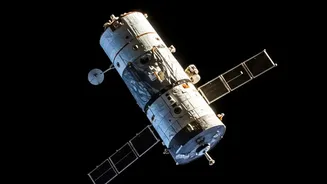
Traditional satellites collect immense volumes of data—from high-resolution images to atmospheric readings. But they must transmit this raw information to ground stations to be processed, creating a significant delay. This bottleneck means that by the time
we get the information, the situation on the ground may have already changed. Whether it’s tracking a fast-moving wildfire, assessing flood damage, or monitoring agricultural conditions, the time lag between data capture and actionable insight has been a persistent hurdle in space-based observation. This process is also incredibly expensive, as it requires massive bandwidth to downlink terabytes of often redundant or low-value data, like images of empty oceans or cloud-covered landscapes.
The Solution: AI-Powered Edge Computing in Space
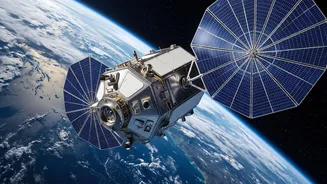
The new approach is to process data directly on the satellite, a concept known as edge computing. By equipping satellites with powerful AI chips, like Google's Tensor Processing Units (TPUs) or NVIDIA's platforms, they can analyze images and sensor data as they are collected. Instead of sending down massive, raw data files, the satellite can send down just the answers: for example, the precise location of a new wildfire, the number of ships in a port, or a notification that a specific crop is showing signs of distress. This shift from data delivery to insight delivery promises to reduce the time for getting critical information from hours to just minutes.
Google's Project Suncatcher Takes Flight
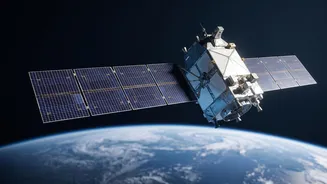
One of the most prominent tests of this new frontier is Google’s Project Suncatcher. The company is launching an experimental satellite, named MVP, aboard a SpaceX Falcon 9 rocket to see if its custom AI chips can survive and function in the harsh environment of space. This mission will test the TPUs against the intense vibrations of launch and the constant bombardment of cosmic radiation. The refrigerator-sized prototype will carry the computing power of a single data center server and will attempt to answer simple AI queries from orbit. It's a crucial first step in a long-term vision that could see constellations of AI-powered satellites working together as a full-fledged orbital data center. A key focus is also tackling the challenge of cooling these powerful chips in the vacuum of space, using innovative radiator systems instead of fans.
A New Space Race for AI Dominance
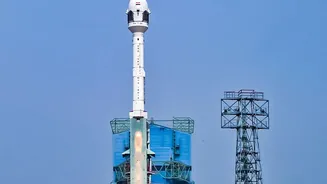
Google is not alone in this ambition. A new space race is heating up among major tech and aerospace players. SpaceX has announced its own plans for a massive orbital data center called Starmind, with aims to deploy its first AI satellites in 2027. The company has filed for a constellation of up to one million satellites and is building a new factory to produce them. Other efforts include those from Blue Origin, NVIDIA, and various international players, including China, which has already launched its own "Supercomputing-1" AI satellite designed for in-orbit data processing. This global competition underscores the massive strategic and commercial potential seen in orbital computing, driven by the insatiable energy demands of AI on Earth and the abundant solar power available in space.
The Future of Real-Time Earth Intelligence
While a full-scale data center in orbit is still years away, the implications of successful onboard AI processing are enormous and near-term. It could revolutionize disaster response by providing emergency crews with instant situational awareness. For climate science, it means faster and more precise monitoring of environmental changes, from melting ice caps to deforestation. In agriculture, it offers the potential for real-time crop health analysis that can improve yields and reduce waste. This isn't just an incremental improvement; it represents a fundamental change in our relationship with space-based data. The shift moves satellites from passive observers to active, intelligent partners in managing our world.