






What's Happening in the Sky?
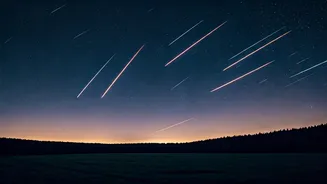
Tonight, the skies above India will host a meteor shower, a celestial event that turns our atmosphere into a temporary canvas. The headline’s poetic phrase, “starlight dropping,” beautifully captures the sight of these shooting stars, which are not actually
stars falling but something far more interesting. They are tiny fragments of cosmic dust and rock, often no larger than a grain of sand, plunging into Earth's upper atmosphere at tremendous speeds. As they burn up from friction with the air, they create brilliant, fleeting streaks of light. It's a silent, magnificent spectacle, a reminder that we are constantly moving through a universe filled with ancient debris and wonder.
A Postcard from the Past
Here's the most mind-bending part: the backdrop for this shower is made of light that is impossibly old. When we talk about distances in space, we use light-years—the distance light travels in one year. The stars you see forming constellations like Orion or the Big Dipper are dozens, hundreds, or even thousands of light-years away. This means the light hitting your eyes tonight from a star 500 light-years away began its journey around the time the Mughal Empire was establishing its dominance across the subcontinent. The faint light from a more distant star might have left its source before the first stones of Humayun's Tomb were even laid. So, as you watch a meteor flash across the sky, you are seeing a real-time event happening 100 kilometres up, silhouetted against a backdrop of light that is older than most of modern history.
The Origin of the Show
So where does this 'stardust' come from? Most annual meteor showers are caused by the Earth passing through the debris trail left behind by a comet. Comets are like giant, dirty snowballs of ice, rock, and dust that orbit the Sun. As they get closer to the Sun, the ice vaporizes, releasing a trail of dust and small rocks along their orbital path. Every year, when Earth's own orbit intersects one of these trails, we get a meteor shower. The particles slam into our atmosphere and vaporize, creating the illusion of a star falling from the sky. Each shower is named after the constellation from which the meteors appear to radiate—for example, the Perseids radiate from Perseus, and the Geminids from Gemini.
How to Watch from an Indian City
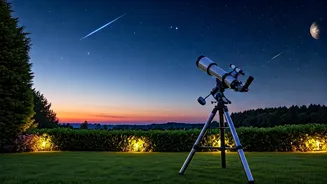
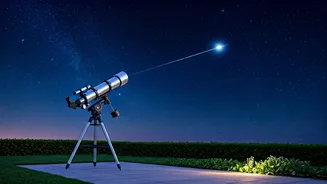
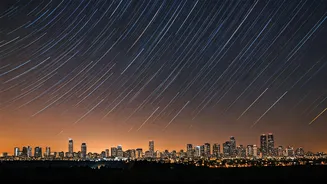
Watching a meteor shower from a bustling metro like Mumbai, Delhi, or Bengaluru comes with one major challenge: light pollution. The bright glow of the city can obscure all but the most brilliant meteors. But don't lose hope. Here’s how to maximize your chances: 1. **Find the Darkest Spot:** Even in a city, some spots are better than others. A large park, a quiet rooftop, or the outskirts of the city will offer a darker sky. 2. **Timing is Everything:** The best time to watch is usually after midnight and before dawn. This is when the part of the Earth you are on is facing forward into the stream of debris, much like the front windscreen of a car collects more rain than the rear. 3. **Be Patient and Ditch the Phone:** It takes your eyes about 20-30 minutes to fully adapt to the darkness. Resist the urge to check your phone, as its bright screen will reset your night vision. Just lie back on a blanket or a recliner and look up. 4. **No Telescope Needed:** Your naked eyes are the best tool for watching a meteor shower. They offer the widest field of view, allowing you to spot the streaks of light wherever they may appear.