








Secure Your Grip: Vehicle Preparedness is Key
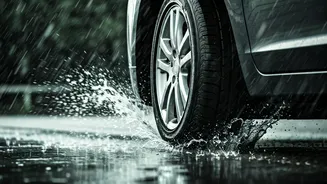
Before you even turn the key, your first line of defence against treacherous monsoon roads is a well-prepared vehicle. 'Grip' starts with your tyres. Ensure they have adequate tread depth, as worn tyres struggle to channel water away and significantly
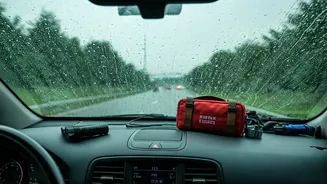
increase the risk of hydroplaning, where your vehicle loses contact with the road. Check that your tyres are inflated to the manufacturer's recommended pressure. Your braking system is equally critical; wet roads increase stopping distances, so have your brake pads checked for wear. Finally, visibility is paramount. Replace worn-out wiper blades that leave streaks and top up your washer fluid. Test all your lights—headlights, taillights, and indicators—to ensure you can see and be seen clearly in heavy downpours.
Master Your Time: Plan for the Unpredictable
Rushing is the enemy of safe monsoon driving. The second pillar, 'time', is about planning and pacing. Give yourself a generous buffer for your commute. Roads that are clear on a sunny day can become gridlocked within minutes of a downpour. Leaving earlier than usual reduces the stress and temptation to speed. Before you leave, check for real-time traffic updates and information on waterlogged areas, and be prepared to take an alternative route. It's also wise to keep your fuel tank topped up, as you have a much higher chance of getting stuck in long traffic jams during the monsoon. The goal is not to beat the clock, but to arrive at your destination safely, even if it takes longer than usual.
Cultivate Patience: The Art of Defensive Driving
The final, and perhaps most important, element is 'patience'. This translates to a defensive and calm driving style. Reduce your speed significantly; experts advise driving slower than the posted limit as hydroplaning can occur at speeds as low as 55 km/h. Increase the following distance between your car and the one ahead to at least three car lengths, as braking takes longer on wet surfaces. Avoid sudden movements like sharp turns, abrupt acceleration, or hard braking, as these can easily cause your vehicle to skid. Be extra cautious of pedestrians and two-wheelers, who are more vulnerable in the rain. One common mistake is using hazard lights while driving in heavy rain; they are meant for stationary vehicles and can confuse other drivers. Use your low-beam headlights instead.
Special Hazard: Navigating Waterlogged Roads
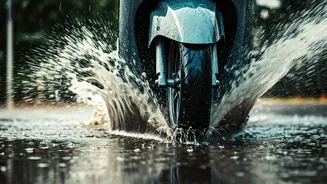
Driving through standing water is one of the biggest risks. If you can, avoid it entirely and find another route. If you must proceed, first try to gauge the depth; as a rule, avoid water that is deeper than the bottom of your car doors or more than 4-6 inches deep. Drive slowly and steadily in a low gear, keeping the engine revs high to prevent water from entering the exhaust pipe. Try to stay in the middle of the road, where the water is often shallowest. Avoid driving against oncoming traffic, as this can create a bow wave that pushes water into your engine bay. Once you are through the water, gently tap your brakes a few times to dry them off and ensure they are working correctly. If your car stalls in water, do not attempt to restart it, as this can cause severe engine damage.