






Why Your Resume Is Fading
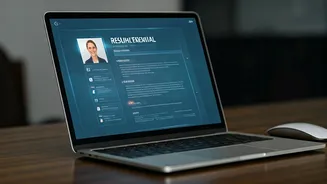
The traditional resume, for all its history, is a static and often flat document. It relies on bullet points and buzzwords that recruiters have seen thousands of times—'team player', 'results-oriented', 'strategic thinker'. These claims are impossible
to verify from the document alone. In today's competitive job market, especially in tech, creative, and marketing fields, hiring managers want proof, not just promises. A resume lists your responsibilities, but it fails to capture the quality of your work, your problem-solving process, or your professional personality. It’s a summary written in a language that forces everyone into the same template, making it incredibly difficult to stand out.
Enter the Digital Portfolio: Your Career Story
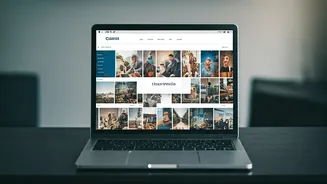
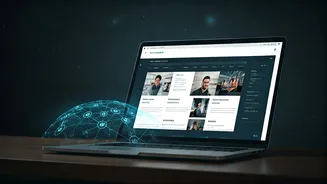
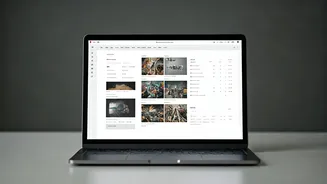
A digital portfolio is a curated, online collection of your best work. Think of it as a living, breathing extension of your professional identity. Unlike a resume that says you 'managed social media campaigns', a portfolio can show the campaign visuals, link to the live posts, and display the engagement metrics. It’s the ultimate application of the 'show, don't tell' principle. For a developer, it’s a link to their GitHub with clean, functional code. For a writer, it’s a collection of published articles. This format allows you to build a narrative around your skills, demonstrating not just the final product but the thought and strategy that went into it. It gives recruiters a genuine insight into your capabilities and how you think.
Who Benefits the Most?
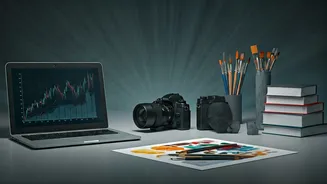
While everyone can benefit from a portfolio, it's a non-negotiable for certain professions booming in India. * **Designers (UI/UX, Graphic):** Platforms like Behance and Dribbble are industry-standard. A portfolio is your primary tool for showcasing aesthetic sense and user-centric design skills. * **Writers and Content Creators:** A personal website or a profile on Contently with links to your best articles proves your range, style, and impact. * **Software Developers:** A GitHub profile is your portfolio. It shows your coding style, your ability to collaborate, and the complexity of the projects you've worked on. * **Marketers:** A portfolio can feature case studies of successful campaigns, detailing the challenge, your strategy, the execution, and the results (e.g., ROI, lead generation growth). * **Architects and Photographers:** These have always been portfolio-driven fields, and a sleek digital version makes your work instantly accessible to a global audience.
Building a Portfolio That Wins
A great portfolio is about quality, not quantity. Don't just dump everything you've ever done. Curate ruthlessly. Select 3-5 of your best projects that showcase a range of skills. For each project, provide context. Don't just show the final design; explain the problem you were trying to solve, your specific role, the process you followed, and the outcome. If possible, include metrics or testimonials that quantify your success. Your portfolio should also include a clear 'About Me' section that tells your professional story and easy-to-find contact information or a link to your LinkedIn profile. The goal is to guide the visitor through your professional journey, making it easy for them to see your value.
Simple Tools to Get You Started
Creating a portfolio doesn't require you to be a web developer. There are many user-friendly platforms available. For a simple, elegant solution, website builders like Squarespace, Wix, and Carrd offer beautiful templates that are easy to customize. For specific fields, leverage dedicated platforms: Behance is perfect for visual creatives, GitHub is essential for coders, and even a well-optimized LinkedIn profile with featured projects can act as a mini-portfolio. The key is to choose a platform that best presents your work and is easy for you to maintain. Start small, pick your strongest project, and build from there. Your online presence is an asset—invest in it.