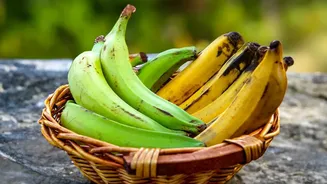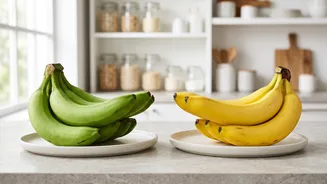



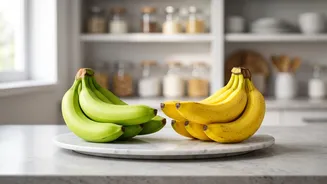


It’s a familiar choice at the fruit stand: do you grab the firm, greenish bananas or the sweet, yellow ones? The answer depends on more than just taste. A banana's journey from green to yellow involves a dramatic shift in its nutritional makeup.
The Green Banana: A Resistant Starch Powerhouse
An unripe,
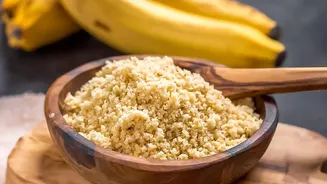
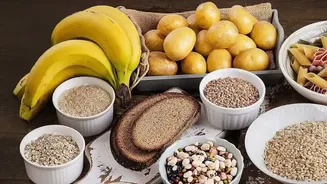
green banana is defined by its high concentration of resistant starch. In fact, up to 80% of a green banana's dry weight is starch. This type of starch 'resists' digestion in your small intestine, travelling largely intact to your colon. There, it acts as a prebiotic, feeding the beneficial bacteria in your gut. This fermentation process produces short-chain fatty acids, which are beneficial for colon health. This slow digestion also means green bananas have a lower glycemic index (GI), a measure of how quickly a food raises blood sugar levels. A green banana has a GI of around 30 to 42, which is firmly in the 'low' category, making it a great choice for those focused on blood sugar management.
The Ripening Process: Starch Converts to Sugar
As a banana ripens, enzymes get to work breaking down the complex resistant starch into simple sugars—primarily sucrose, glucose, and fructose. This is why a yellow banana is noticeably softer and sweeter than its green counterpart. While a green banana can be mostly starch, a fully ripe one may contain less than 1% starch. This chemical change not only transforms the taste and texture but also how your body processes the fruit. The total carbohydrate count stays roughly the same, but the type of carbohydrate shifts dramatically from slow-digesting starch to fast-acting sugar. The peel also changes, with antioxidant levels increasing as the banana develops yellow and then brown spots.
The Ripe Banana: Quick Energy and Easier Digestion
A ripe, yellow banana offers its own set of advantages. Because its carbohydrates are now mostly simple sugars, it provides a quick and easily digestible source of energy, making it an ideal pre-workout snack for athletes. For many people, ripe bananas are also easier on the stomach. The breakdown of resistant starch means they are less likely to cause the bloating or gas that some individuals experience with green bananas. As bananas ripen and develop brown spots, their antioxidant levels also peak. These compounds help protect your body's cells from damage.
Impact on Blood Sugar and Digestion
The shift from starch to sugar significantly affects the glycemic index. While a green banana has a low GI, a ripe banana climbs to around 51, and an overripe one can reach 62 or higher. This is still in the low-to-medium range, but the difference is meaningful for anyone with diabetes or insulin sensitivity. Ripeness also affects FODMAP content. FODMAPs are types of carbs that can trigger digestive issues like bloating and gas in people with Irritable Bowel Syndrome (IBS). Green bananas are low in FODMAPs, but as they ripen, the fructan content (a type of FODMAP) increases, making ripe bananas a high-FODMAP food that may need to be limited by those with sensitivity.
Which Banana Should You Choose?
Ultimately, the 'best' banana depends entirely on your health goals and personal preferences. If you're managing blood sugar, looking to improve gut health with prebiotics, or want a snack that keeps you feeling full for longer, a less-ripe, slightly green banana is your best bet due to its high resistant starch content. If you need a quick energy boost before exercise, want something that’s easier to digest, or are baking and need natural sweetness, a ripe or even overripe banana is the superior choice. For most healthy individuals, any stage of banana can be part of a balanced diet, with the main consideration being portion size.