








What OpenAI's Local Processing Means
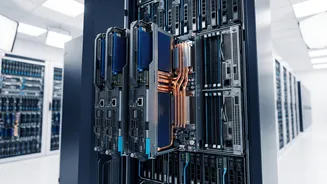
OpenAI has enabled 'API inference residency' in India, a significant step that allows businesses and developers to have their AI workloads processed directly within the country's borders. Previously, when a developer in India used an OpenAI API, their data
would often travel to servers in other parts of the world for processing before a response was sent back. Now, for supported models like GPT-6 Luna, the entire lifecycle—from the initial request to the complex model computation and the final response generation—happens on infrastructure located in India. This also means that customer content related to these requests is stored locally, addressing a key requirement for many Indian companies. This move is a core part of OpenAI's broader strategy for India, which includes partnerships and infrastructure investments aimed at making AI more accessible and useful for the local market.
The Critical Need for Speed and Low Latency
For artificial intelligence applications, speed is paramount. The delay between sending a query and receiving a response, known as latency, can make or break a user's experience. By processing API requests within India, OpenAI dramatically reduces this latency. Data no longer needs to make a long round trip to servers overseas, which means AI-powered applications feel faster and more responsive. This is especially critical for real-time uses, such as interactive customer service chatbots, live data analysis tools in fintech, or dynamic content generation for e-commerce platforms. Lower latency ensures smoother, more fluid interactions, moving AI from a background tool to a seamless part of the user-facing experience and improving overall efficiency.
Unlocking Cost and Innovation Advantages
Beyond performance, local data processing offers tangible financial benefits for the Indian developer community. Sending large amounts of data to and from international data centers incurs costs associated with data transfer. By keeping traffic within India, businesses can significantly reduce these operational expenses, making it cheaper to build and scale AI-powered services. This cost efficiency is a powerful enabler for startups and smaller companies, lowering the barrier to entry for building sophisticated AI applications. As OpenAI's Head of Enterprise for India, Nitin Bawankule, noted, this move gives 'Indian developers and startups more scope to build for their own, and enterprise needs'. It empowers a new wave of innovation by making world-class AI models more economically viable for a wider range of projects.
Navigating India's Data Sovereignty Landscape
Perhaps the most crucial driver for this launch is India's evolving regulatory environment around data. With the Digital Personal Data Protection (DPDP) Act coming into full force, rules around how and where personal data is stored and processed have become a central concern for businesses. Many sectors, including financial services, healthcare, and insurance, have strict data localisation mandates that require sensitive user information to remain within India's borders. OpenAI's local processing directly addresses this 'practical barrier to adoption,' as many businesses were previously hesitant to use AI for core operations due to compliance risks. By ensuring data sovereignty, OpenAI unlocks its tools for use in highly regulated industries, allowing them to leverage AI while adhering to legal and security standards.
A Strategic Investment in India's AI Future
OpenAI's decision to offer local processing is a clear signal of its long-term commitment to the Indian market. It follows earlier initiatives like 'OpenAI for India' and partnerships with local giants like the Tata Group to build domestic AI data center capacity. India is one of the largest and fastest-growing markets for AI tools, and this move positions OpenAI as a key infrastructure partner for the nation's digital ambitions. By providing the tools for faster, cheaper, and compliant AI development, the company is not just selling a service; it's embedding itself into the fabric of India's burgeoning tech ecosystem. This will likely accelerate the creation of new AI-driven solutions tailored for the Indian context, from startups to large enterprises.