



Venus’s Bizarre Calendar
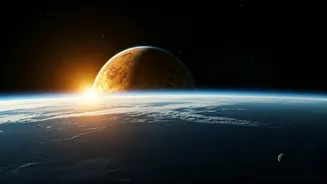
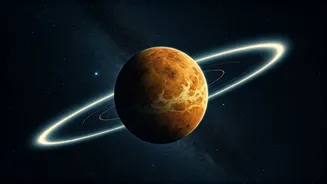
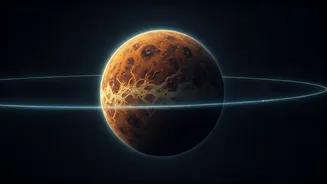
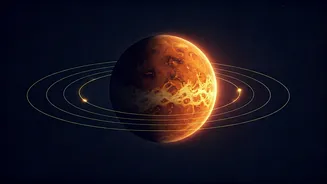
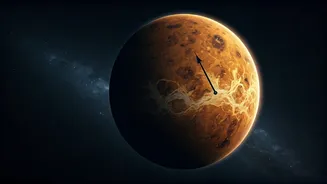
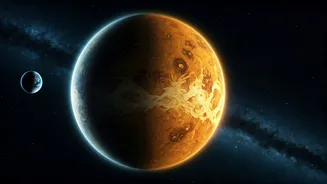
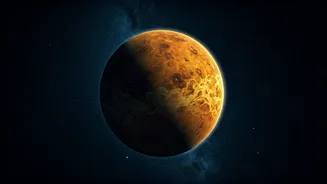
Let's get the mind-bending numbers out of the way. Venus takes 225 Earth days to orbit the Sun, defining its year. However, it takes a staggering 243 Earth days to rotate once on its axis—its day. A Venusian day is therefore longer than a Venusian year. If
you were on Venus, you'd celebrate your first birthday before a full day-night cycle passed. This makes Venus an outlier in our solar system, where days are typically a fraction of a year. Earth, for instance, spins over 365 times per orbit. Venus’s leisurely spin is a fundamental clue to its uniquely inhospitable nature.
The Two Types of Day
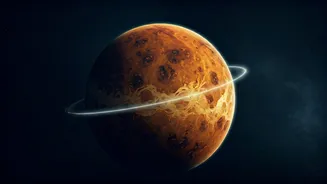
To be precise, astronomers use two types of day. The 243-day period is a "sidereal day"—one full rotation relative to the stars. But what a resident would experience from one sunrise to the next is a "solar day." Because Venus rotates backwards (retrograde) while orbiting the Sun, its solar day is shorter than its sidereal day, at about 117 Earth days. This means the sun rises roughly twice per Venusian year. Compounding the strangeness, the sun rises in the west and sets in the east, creating a cosmic dance unlike anything on Earth.
Why the Slow, Backward Spin?
Why does Venus spin so slowly and backwards? Scientists have two leading theories. The first involves a colossal impact early in its history, where a massive object may have slammed into Venus, drastically slowing its rotation or flipping it upside down. Its current "retrograde" rotation could be an almost-upside-down planet spinning slowly. The second theory points to Venus's incredibly thick atmosphere, 90 times denser than Earth's. Some models suggest that powerful atmospheric tides, created by solar heating, exerted a frictional drag on the surface over billions of years, gradually slowing its spin to its current crawl and even reversing it.
A World Cooked by a Long Day
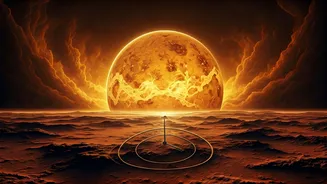
This extremely long day has catastrophic consequences. The sun beats down on the same spot for nearly four Earth months at a time. This prolonged baking, combined with a runaway greenhouse effect from its carbon-dioxide-rich atmosphere, has turned Venus into a planetary oven. Surface temperatures average a scorching 465°C, hot enough to melt lead. The slow rotation is also why Venus lacks a significant magnetic field. Fast-spinning planets like Earth generate a protective field from their molten cores, shielding them from solar radiation. Venus’s slow spin means its core doesn't create a similar dynamo, leaving its atmosphere exposed.
Earth's Twin No More
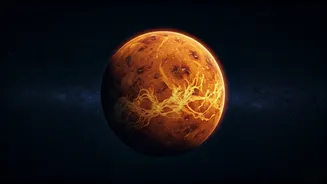
Venus is often called Earth's "twin" due to its similar size and mass, but the comparison ends there. The story of Venus is a cautionary tale of how a similar planet could end up so different. Its rotation is a critical part of that story. While Earth’s 24-hour day creates a stable climate, Venus's 243-day rotation helped forge a world of extremes. It's a stark reminder that a planet's livability depends on a delicate balance, where the length of a day can mean the difference between a blue oasis and a hellish wasteland.