



A New Cosmic Telescope Changes Everything
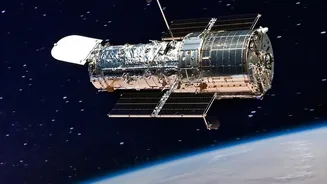
The latest breakthroughs in understanding how galaxies grow come courtesy of the James Webb Space Telescope (JWST). Launched as the successor to the Hubble Space Telescope, Webb is a technological marvel designed to see the universe in infrared light.
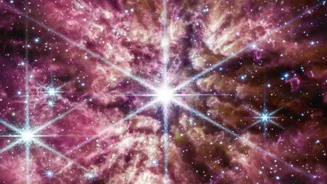
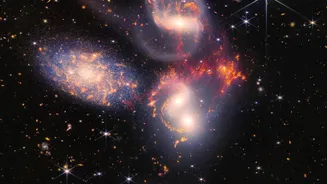
This is crucial because the light from the most distant, and therefore earliest, galaxies has been stretched by the expansion of the universe into these longer wavelengths. Webb's giant mirror and advanced instruments allow it to cut through cosmic dust and peer back to a time when the universe was in its infancy, just a few hundred million years after the Big Bang. These capabilities have provided astronomers with images of unprecedented clarity and depth, revealing details that were previously impossible to see and challenging long-held assumptions about the early cosmos.
Galaxies More Mature Than Expected
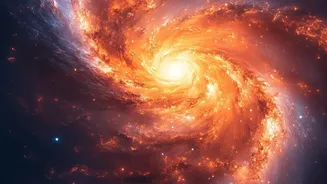
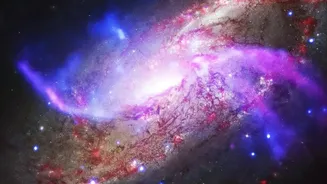
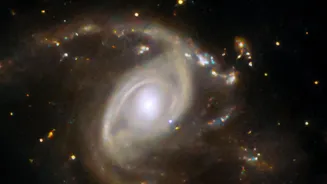
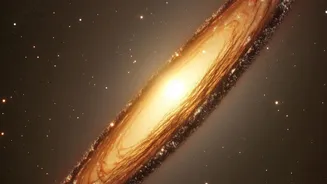
One of the most surprising findings from recent JWST observations is how mature many early galaxies appear. Models had predicted that the first galaxies would be small, chaotic, and chemically simple. Instead, astronomers are finding galaxies that are surprisingly large, bright, and structurally complex far earlier in cosmic history than anticipated. For example, researchers at Durham University recently identified a well-defined, rotating disc of stars, known as a 'nuclear disc,' in a galaxy seen as it was over nine billion years ago. Such structures were thought to have formed much later. This suggests that the processes driving galaxy formation, like the formation of stellar bars that funnel gas and stars to the center, were already active when the universe was relatively young.
Solving the Mystery of the First Stardust
Galaxies are not just collections of stars; they are also filled with gas and dust made of heavier elements, which astronomers call 'metals'. These elements are forged inside stars and scattered through space when the stars die, providing the raw materials for new stars and planets. A major question has been how the early universe became so dusty so quickly. Recent JWST discoveries are providing answers. By studying both distant objects and nearby galaxies that serve as analogues for early ones, scientists have been able to get a clearer picture of these ancient 'stardust factories'. Some of the most distant objects ever confirmed, nicknamed 'Little Red Dots' and seen just a few hundred million years after the Big Bang, are already showing signs of chemical enrichment, forcing scientists to rethink how quickly the first generation of stars could have formed and seeded the cosmos with new elements.
How Stars Shape Their Galactic Homes
The new images also provide a more detailed understanding of 'stellar feedback'—the process by which stars influence their own environment. A recent study combining data from both the Webb and Hubble telescopes examined thousands of young star clusters. It found that the most massive clusters emerge from their birth clouds of gas much more quickly, in as little as five million years. As they do, they blast the surrounding galaxy with powerful stellar winds and ultraviolet radiation. This feedback can clear out gas, halting star formation in one area while potentially triggering it in another. Understanding this dynamic is crucial, as it explains why most of the gas in a galaxy is never actually used to form stars and how galaxies develop their intricate structures over billions of years. This process of star birth, feedback, and galactic sculpting is a fundamental part of the cosmic evolutionary story.