





The humble potato, a staple in Indian kitchens, is getting a vibrant makeover. But this isn't just about aesthetics. Scientists are transforming this everyday tuber into a nutritional powerhouse, signalling a major shift in crop improvement research.
From Food Security to Nutritional Security
For decades, the focus of agricultural research in India has been on increasing crop yields to ensure food security for a growing population. While successful, this has left a lingering problem known as 'hidden hunger'—a lack of essential vitamins and minerals in the diet, even when calorie intake is sufficient. To tackle this, scientists at the Indian Council of Agricultural Research-Central Potato Research Institute (ICAR-CPRI) in Shimla are leading a new charge: biofortification. This approach involves breeding crops to be naturally richer in nutrients, and the potato is a prime candidate. Instead of adding nutrients during processing, biofortification makes the food itself inherently more nutritious, offering a sustainable way to improve public health.
The Science Behind the Colour
What gives these new potatoes their striking purple, red, and blue hues are natural pigments called anthocyanins. These are the same powerful antioxidants found in blueberries, blackberries, and other 'superfoods'. Research shows that anthocyanins have antioxidant and anti-inflammatory properties and can contribute to better health. They work by protecting the body's cells from damage caused by oxidative stress. The development of potatoes rich in these compounds marks a significant move away from breeding purely for yield and towards creating food that actively supports health and wellness.
Meet India's New Potato Varieties
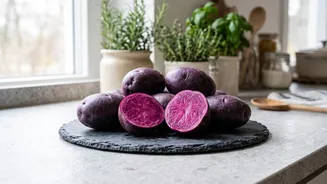
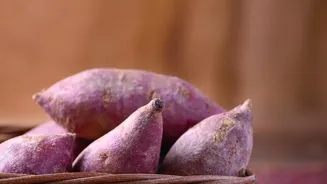
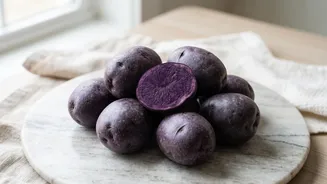
ICAR-CPRI has successfully developed and released several coloured potato varieties tailored for Indian agro-climatic conditions. The first major success was 'Kufri Neelkanth', released in 2018. This variety features a striking dark purple skin with cream-coloured flesh and is packed with antioxidants. Following this, 'Kufri Manik' was introduced in 2021, sporting a deep red skin and yellow flesh, also rich in anthocyanins, zinc, and iron. The latest breakthrough is 'Kufri Jamunia', released in 2024, which is purple through and through—both skin and flesh. Kufri Jamunia boasts even higher levels of Vitamin C, anthocyanins, and carotenoids, making it a major advancement in biofortified crops.
Benefits for Health and Hearth
The nutritional profiles of these coloured potatoes offer tangible health benefits. Studies suggest that diets rich in anthocyanins can support heart health, improve blood pressure, and help regulate blood sugar levels. By incorporating higher levels of iron and zinc, varieties like Kufri Manik and Kufri Jamunia can help combat widespread micronutrient deficiencies such as anaemia. For the consumer, this means the simple act of eating potatoes can become a step towards better health. For farmers, these new varieties are also a win. They have been bred to deliver high yields, with Kufri Neelkanth yielding 35-38 tonnes per hectare and Kufri Jamunia showing similar potential. Their unique appearance and nutritional benefits can also fetch premium prices in the market, creating new economic opportunities.
The Future on Your Plate
The introduction of coloured potatoes is more than just a novelty; it represents the future of nutrition-sensitive agriculture in India. Their mealy texture makes them suitable for a wide range of Indian dishes, from parathas to processed snacks and even nutrient-rich flour. As awareness grows, these vibrant tubers are poised to move from niche markets to mainstream consumption. Progressive farmers in states like Punjab are already cultivating these varieties, signalling a growing interest in high-value specialty crops. The success of Kufri Neelkanth, Kufri Manik, and Kufri Jamunia provides a clear roadmap for how scientific innovation can be harnessed to nourish a nation, one colourful potato at a time.