







The Hereditary Custodians
The construction of the three iconic chariots is not a job, but a hereditary service, or 'seva'. Several communities of artisans, known as sevayats, are entrusted with this holy task. The main group, the Maharana sevayats or 'Biswakarmas', are the master
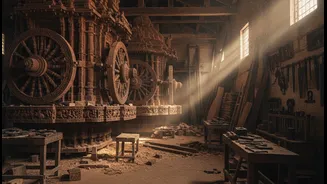
carpenters responsible for the primary construction. They are assisted by the Bhoi sevayats, who handle the heavy labour of transporting the massive logs, and the Kamara sevayats, the blacksmiths who forge every single nail and metal fitting by hand. These skills are passed down from father to son, with young boys learning by observing their elders at the Ratha Khala, the open-air workshop where the chariots take form. This generational transfer ensures that the ancient knowledge, unchanged for centuries, continues to thrive.
An Unwritten Blueprint of Faith
Remarkably, there are no written blueprints or modern architectural plans for these colossal structures. The entire engineering knowledge is stored in the minds of the senior artisans, passed down through oral tradition and practical application. Measurements are not taken in feet or inches but in traditional units like 'haat' (the length of a forearm) and 'anguli' (the width of a finger). The process begins months before the yatra, on auspicious days like Sri Panchami and Akshaya Tritiya, with the ritual consecration of the first logs of wood. This marks the start of a 58-day construction period, where over 150 artisans work with unwavering devotion to transform more than 800 logs into divine vehicles.
From Sacred Forest to Grand Avenue
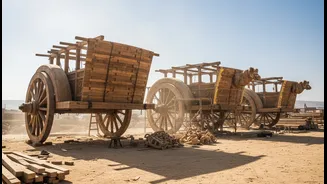
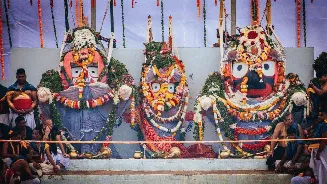
The process starts with the careful selection of specific trees like Phasi, Dhausa, and Simli from designated forests, chosen for their strength and straightness. Once the logs arrive in Puri, the work begins on the three distinct chariots: Nandighosha for Lord Jagannath, Taladhwaja for Lord Balabhadra, and Debadalana for Devi Subhadra. Each chariot has its own specifications. Nandighosha, the tallest at 45 feet, has 16 wheels and is draped in red and yellow cloth. Taladhwaja stands at 44 feet with 14 wheels, covered in red and green, while the 43-foot Debadalana has 12 wheels and is adorned with red and black fabric. The work is a symphony of coordinated effort, from the blacksmiths forging thousands of nails to the 'Chitrakars' (painters) who use a traditional palette of red, yellow, black, and white to adorn the chariots.
The Science of Sacred Construction
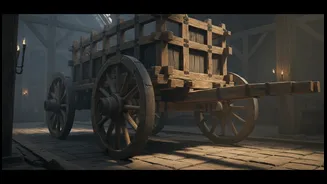
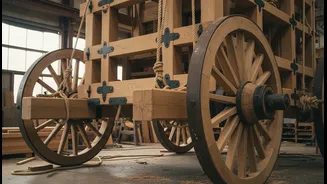
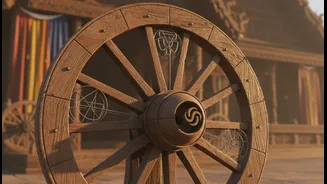
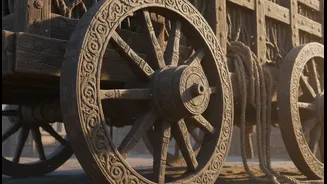
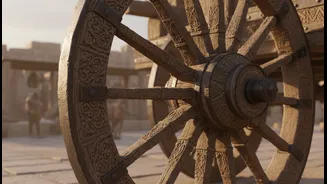
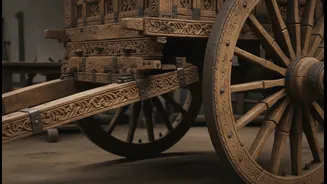
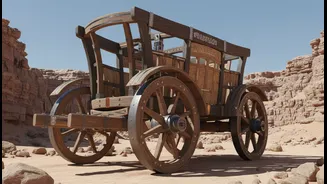
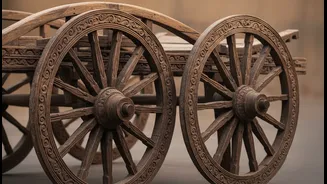
The engineering of the chariots is a testament to ancient Indian ingenuity. The massive wooden structures are built to withstand the immense forces generated when thousands of devotees pull them along the 3-kilometre Grand Road to the Gundicha Temple. A key feature of the construction is the use of traditional joinery techniques. While blacksmiths create around 70 different types of iron nails and clamps for various parts, the core structure is ingeniously held together without them, relying on wooden pegs and joints. This sophisticated carpentry ensures both strength and flexibility. The wheels, each seven feet in diameter, are a marvel in themselves, carefully assembled and fitted to axles that can bear the immense weight and momentum of the procession.
A Living Tradition in the Modern World
In an age of digital design and mechanised production, the building of the Rath Yatra chariots stands as a powerful symbol of living heritage. The artisans are not just builders; they are guardians of a sacred trust. Their work is a form of worship, performed with discipline and devotion. While challenges like sourcing specific old-growth timber have emerged, the tradition endures through the unwavering faith of these communities. For them, building the chariots is the highest honour, a service to the Lord that transcends generations and preserves a unique engineering legacy for the world to witness each year.