




A Global Stronghold
Kaziranga isn't just a park with rhinos; it's the most important sanctuary for the species on the planet. This UNESCO World Heritage Site in Assam is home to the world's largest population of one-horned rhinos, holding more than 70% of the entire global
population. The latest census from 2022 pegged the number at 2,613 rhinos within the park, an increase of 200 from the 2018 count. This dense concentration makes sightings on a safari highly likely, offering a unique chance to see these giants in their natural habitat. The total population across India and Nepal has rebounded to over 4,000 individuals, a huge jump from the mere 200 that remained at the start of the 20th century.
An Armour-Plated Appearance
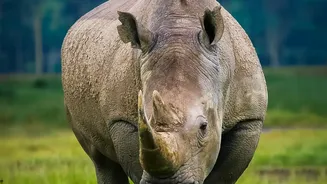
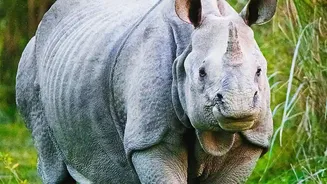
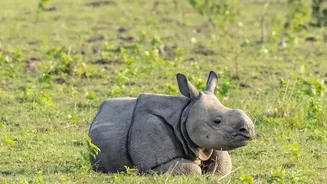
One of the rhino's most striking features is its skin, which looks like a suit of armour. This grey-brown hide has deep folds, particularly around the neck, shoulders, and rump, giving it a segmented, plate-like appearance. The skin is covered in round, wart-like bumps, which adds to its rugged texture. Despite its tough look, the skin between the folds is actually quite soft and thin. This 'armour' is not just for show; it offers protection as these massive animals navigate the dense grasslands and interact with each other.
The Horn Is Not Bone
Contrary to what some might think, a rhino's horn is not made of bone, nor is it attached to its skull. It is made of keratin, the same protein that makes up human hair and fingernails. The horn grows continuously throughout the rhino's life from specialized skin cells. It has a dense core containing calcium and melanin, which makes it strong and protects it from the sun's UV rays. The outer layers are softer and wear down over time, which, combined with the rhino's habit of rubbing it on the ground, helps sharpen it to a point. While formidable, it's used more for foraging for roots and moving branches than for fighting.
A Conservation Comeback Story
The thriving rhino population in Kaziranga is one of the greatest conservation success stories in the world. Once hunted nearly to extinction for sport and due to habitat loss, their numbers dropped to fewer than 200 at the start of the 20th century. Strict protection from Indian and Nepalese authorities, along with initiatives like the Indian Rhino Vision 2020 (IRV 2020), has been crucial. This program aimed to increase the rhino population to 3,000 by translocating animals to establish populations in new protected areas, reducing the risk of having them all in one place. Thanks to these efforts, the species' status on the IUCN Red List was downgraded from 'Endangered' to 'Vulnerable' in 2008.
Surprisingly Agile Giants
Despite their immense size, with males weighing between 1,800 and 2,700 kg, one-horned rhinos are surprisingly agile. When needed, they can run at speeds of up to 40 km/h for short bursts. They are also excellent swimmers and semi-aquatic, often spending the hottest parts of the day wallowing in mud or submerged in water bodies to stay cool. This love for water means they are perfectly suited to Kaziranga's landscape of marshes, swamps, and riverine grasslands.
Solitary But Socially Aware
Greater one-horned rhinos are primarily solitary creatures, especially adult males who maintain loosely defined, overlapping territories. The main exception is mothers, who stay with their calves for several years. However, 'solitary' doesn't mean 'antisocial'. Rhinos often congregate at wallows or while grazing without much conflict. They use large dung piles, known as 'middens', as a form of communication, leaving scent markers that tell other rhinos about who is in the area.
The Safari Experience
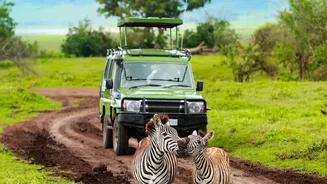
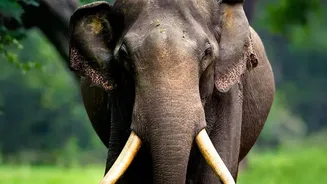
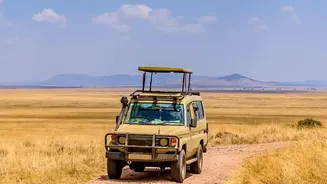
To see the rhinos, you can choose between a jeep safari or an early morning elephant-back safari. The park is divided into several ranges, with the Central (Kohora) and Western (Bagori) ranges being the most popular for rhino sightings. Safaris are conducted in the morning and afternoon, with the animals being most active in the cooler parts of the day. The safari season typically runs from November to April, as the park closes during the monsoon floods. Seeing a rhino up close, grazing peacefully in the tall grass, is the highlight of any trip to this incredible park.